My First Solo Trip with My Child: The Warmth of Leshan and Chengdu Healed All My Anxieties
Meta Description: Discover how a spontaneous mother-daughter trip to Leshan and Chengdu turned anxiety into adventure. From Suji Ancient Town's street food to the Jiayang Small Train, this solo parenting travel guide proves you can do it too.
Introduction: When "We Have to Think About Everyone" Became My Green Light
The three-day Qingming Festival holiday had originally been planned as a family trip, but due to various reasons, it shrank to just two days. Watching my husband's helpless expression as he said, "We have to think about everyone," I felt a surge of frustration—fine, if you won't take the kid on an adventure, I will! That very night, I booked plane tickets for the following day, grabbed my four-and-a-half-year-old daughter, Xiaoyudi, and embarked on a true spontaneous getaway.
To be honest, I was nervous about traveling alone with my child to a place as far away as Chengdu. My previous two trips to Sichuan had been company team-building events, rushed like military campaigns, and both times I ended up with gastrointestinal issues, leaving me with almost no fond memories of this food paradise. But the words were out, and I couldn't back down. To make things even more dramatic, the night before departure, Xiaoyudi suddenly spiked a fever of 39.5°C (103°F). I kept telling myself, "It's okay, I can always cancel," while quietly packing our bags. The next morning, the little guy bounced out of bed full of energy, as if the fever from the night before had just been a food-induced hallucination. Seeing his expectant little face—especially when he realized Daddy wasn't coming and started humming a tune—I made up my mind: Let's go!
Day 1: Suji Ancient Town—Not Enough Mouth, Not Enough Stomach
From Beijing to Chengdu, Shuangliu Airport seamlessly connects to the high-speed rail, taking us straight to Leshan—smooth sailing all the way. To save time, I chose to bring a carry-on suitcase onto the plane instead of checking luggage. This decision turned out to be brilliant—the plane was delayed, but without waiting for baggage, I dashed straight onto the high-speed train and made it perfectly on time.
When checking into the hotel, I specifically booked a room with a bathtub, worried that Xiaoyudi might get bored at night. But as soon as we walked in, the little guy insisted on taking a bath and didn't come out until dinner time. We took a taxi to Suji Ancient Town—the birthplace of "qiaojiao niurou" (crossed-leg beef), and a food paradise that's all over Xiaohongshu (Little Red Book). On the way, I put our name in at "Wushi Fang Qiaojiao Niurou Laotang Huoguo" (Five Generations' Crossed-Leg Beef Old Broth Hotpot), with only 8 groups ahead of us. I figured we could wander around and come back just in time to eat.
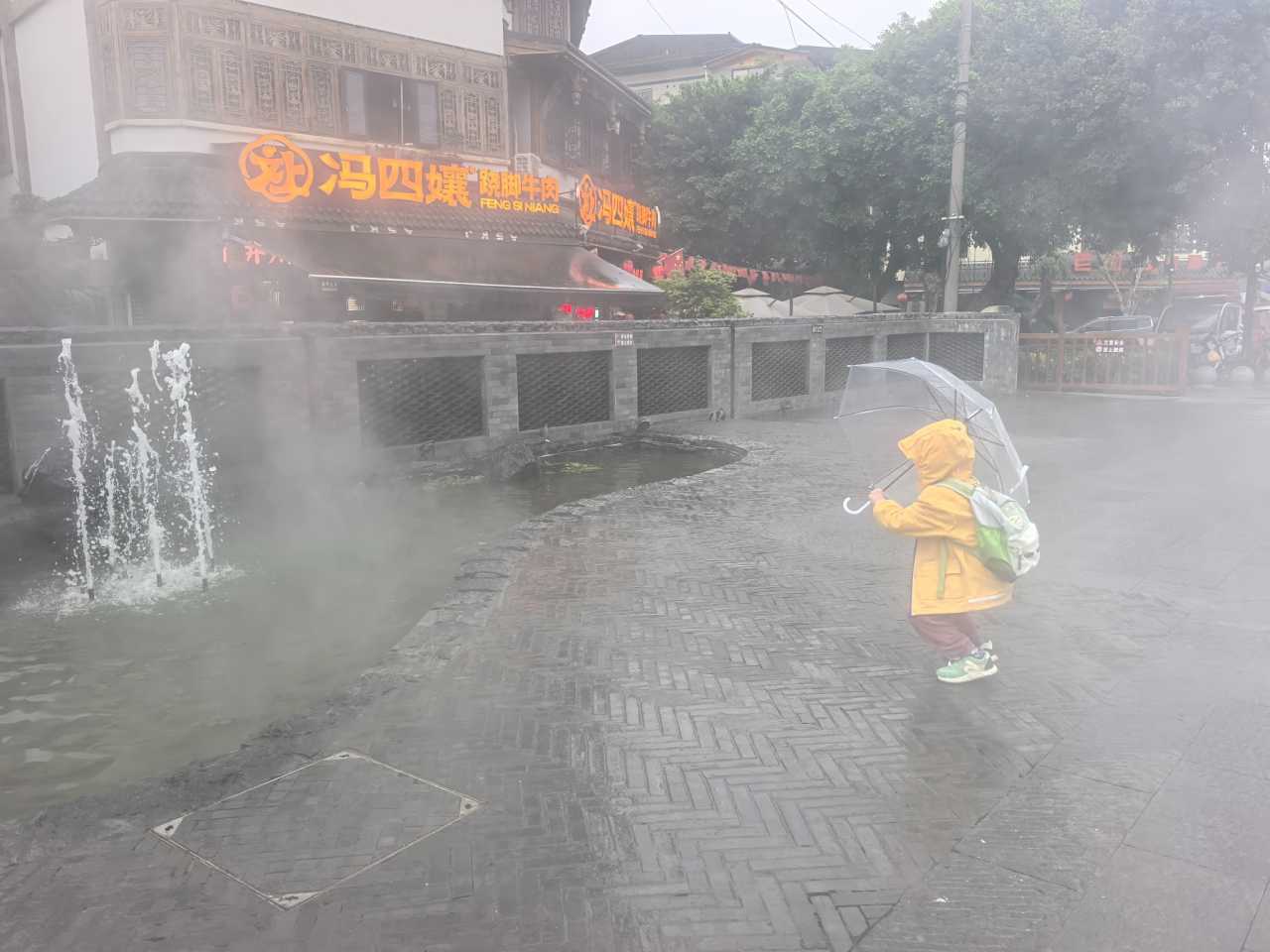
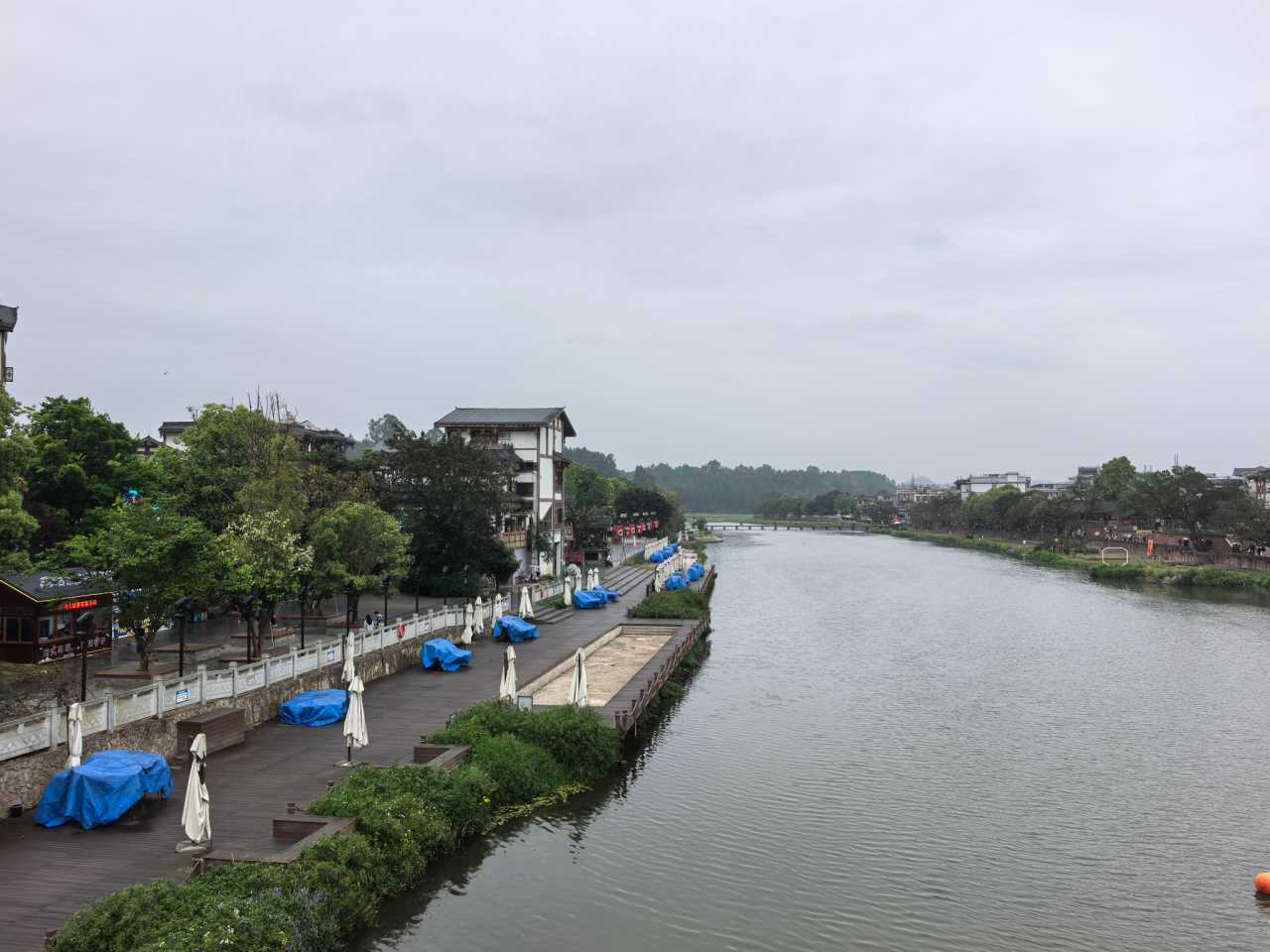
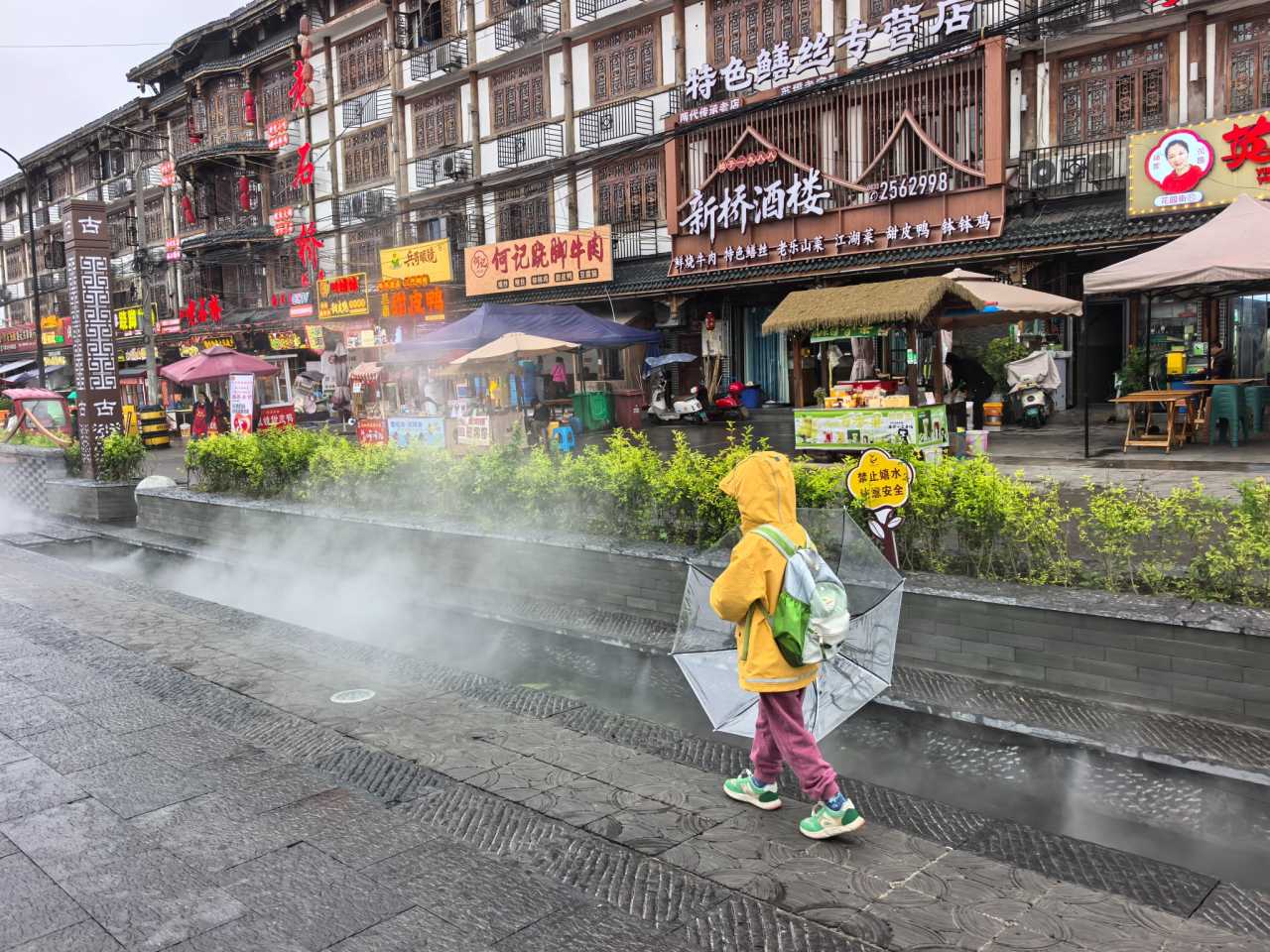
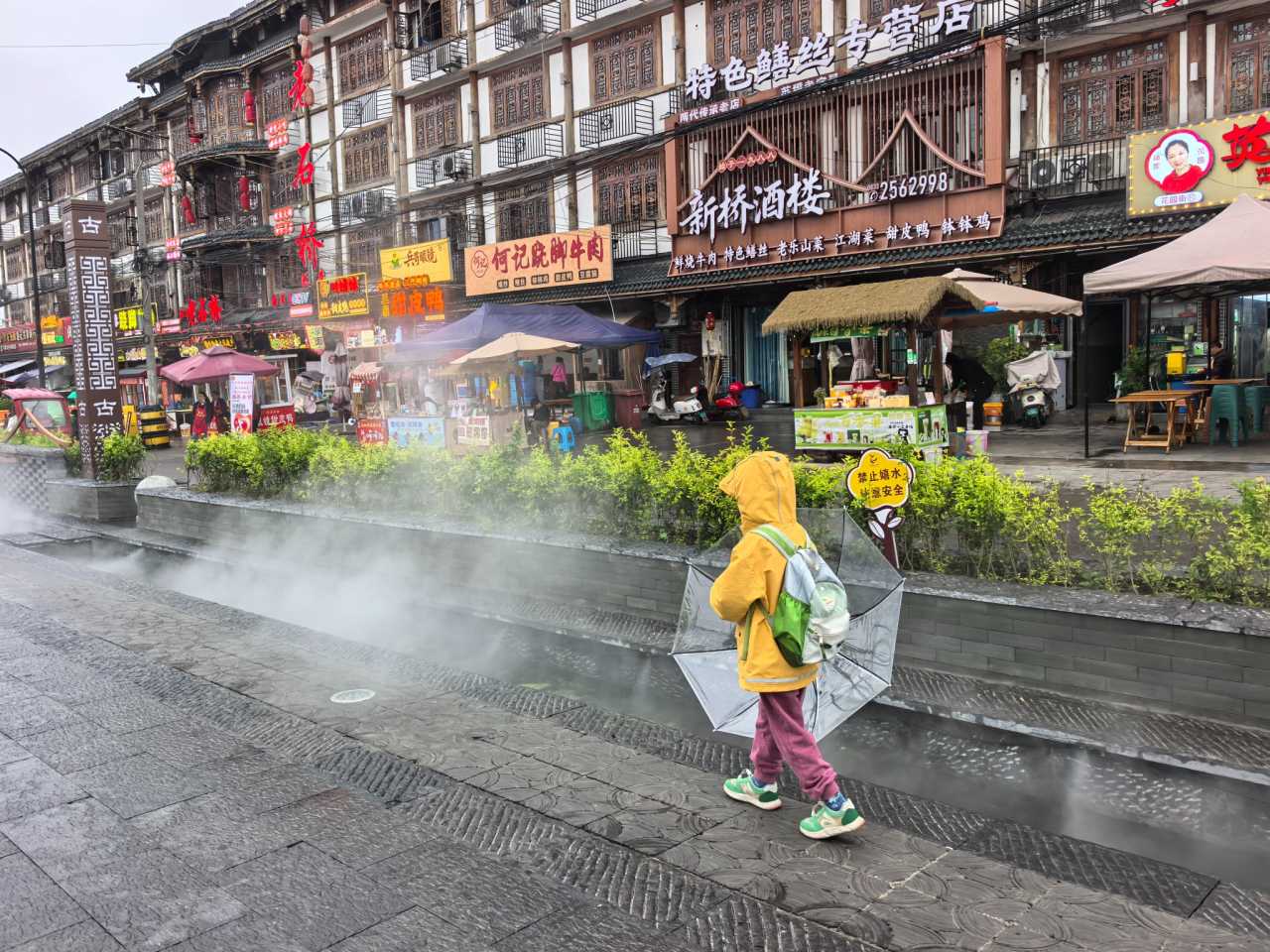
Suji Ancient Town is bisected by the Emei River, its waters crystal clear, with restaurants and snack stalls lining both banks. Qingming Festival had just passed, so the dragon boat performances on the river had already stopped, but the town itself was still buzzing with activity. When we arrived, a light drizzle was falling. Xiaoyudi's jacket was enough to keep him dry, and he was thrilled—the mist spraying from roadside vents made him feel like he was in a fairyland.
In the ancient town, it was hard to find a shop that wasn't selling food. Xiaoyudi wanted to eat everything he saw, whining that he was hungry. I held his hand and walked all the way to Lai Apopo Tianpi Ya (Granny Lai's Sweet-Skin Duck)—a small street-side shop tucked away in a residential area with no dine-in seating. So I bought half a duck and then sat down at the nearby Gu Jia Doufunao (Gu Family's Tofu Pudding). The duck's skin was crispy, the meat lean, the sauce rich, sweet without being cloying—Xiaoyudi ate it with grease running down his chin. The bowl of tofu pudding, which I'd only ordered for a seat, cost 10 yuan and was unexpectedly delicious—thick, savory sauce, completely different from the watery versions in Beijing.
While eating, I scrolled through Xiaohongshu and suddenly realized something was off: The posts recommending Lai Apopo's duck also recommended "Dan Jie De Bing" (Sister Dan's Ice), "Fang Ji Mihua Tang" (Fang's Rice Candy), "Gu Jia Doufunao," the "Yi Long Shaomai" (One Basket of Pork Dumplings) across the street, and "Xu Lianggao" (Xu's Cold Rice Cake)… It felt like 80% of Suji Ancient Town's must-eat list was within 100 meters of this spot! Whatever—I'm an outsider, and as long as it tastes good, who cares?
So we also bought some "Fang Ji Mihua Tang" (rice candy). Xiaoyudi carried it around, eating it as we walked, and it appeared in every single photo we took.
Rugong Bridge is the oldest stone bridge in the ancient town. The gaps between the blue stone slabs were so wide you could see the river below. Locals zipped across on electric scooters, and I couldn't help worrying that their wheels might get stuck in the cracks. The Qiaojiao Niurou Intangible Heritage Museum was worth a visit—I'd never seen so many varieties of chili peppers before. Red ones, green ones, dried ones, fresh ones—it was like a small chili pepper museum.
At night, the covered bridge lit up, reflecting on the river's surface, incredibly beautiful. We went to try the recommended "Ju Popopo Mianmian Bing" (Granny Ju's Silky Ice), and Xiaoyudi ordered watermelon flavor, eating it with a blissful expression. When we came out, the rain was getting heavier. I checked the wait at Wushi Fang—three hours had passed, and there were still 6 groups ahead of us. Forget it—leave some regrets for next time.
On the way back to the hotel, the driver offered to take us to the Jiayang Small Train the next day as a private hire—200 yuan for the whole day, tolls extra. It was a bit more expensive than a ride-hailing service, but much cheaper than booking through a platform. I hesitated and asked Xiaoyudi, "This uncle says he'll take us tomorrow. Do you think it's safe?" The little guy thought for a moment and said, "I think the uncle is nice, but I also think it's not safe." Well, mother and son think alike—we'll just call a ride-hailing car.
Day 2: Jiayang Small Train—Mine Adventure, the Romance of the Steam Age
When I woke up in the morning, my throat started to hurt. A sense of dread washed over me—was I going to get sick in Sichuan again, just like the last two times? The hotel breakfast had "chuanchuan" (skewers), and I picked the Sichuan pepper flavor, which wasn't spicy. Xiaoyudi loved them too.
The Jiayang Small Train is located in Qianwei County, Leshan, about 67 kilometers from the city center, with inconvenient public transportation. Even the hotel front desk advised us not to go, saying the travel was too complicated and we might not make it back. But luckily, both legs of the round-trip ride-hailing service had been accepted the night before. The driver on the way there was familiar with the route and said it would take just over an hour to reach Yuejin Station.
The Jiayang Small Train is the only operational passenger steam-powered narrow-gauge railway in the world. Built in 1959, it was originally an important means of transportation for villagers to travel in and out of the mountains and transport supplies. We chose the classic route from Yuejin Station to Bagou Station. Since Qingming Festival had just ended, there were very few tourists—only one of the three train cars was open. Xiaoyudi was still short enough to be exempt from a ticket, but the wooden seats were small and narrow. I was hesitating whether to buy another ticket when a staff member waved me off: "Don't buy one. There aren't many people, so just take an empty seat. Save your money." The local hospitality was truly genuine.
When the train departed, the sky unexpectedly cleared up. Under a blue sky with white clouds, the train wound through bamboo groves, steam billowing out as if it had emerged from a bygone era. The first stop was Mifengyan (Bee Rock), named for its historical abundance of honey. Due to the narrow terrain, the train used a switchback method similar to Zhan Tianyou's "herringbone" design on the Beijing-Zhangjiakou Railway, where the rear of the train becomes the front. On the platform, there was a small souvenir shop selling train whistles and model trains. Xiaoyudi picked out a whistle and blew it all the way to the next stop.
The second stop was Bagou Station, the final stop for the classic route. Here, we had a 30-minute layover to explore the small mining museum. The station itself was like a time capsule—old-fashioned ticket windows, coal stoves, and a blackboard with handwritten departure times. Xiaoyudi was fascinated by the mining helmets and insisted on wearing one for photos. The museum explained the history of the Jiayang coalfield, which once supplied much of southern Sichuan's energy. Standing there, I realized this wasn't just a tourist attraction—it was a living piece of industrial heritage.
On the return trip, the train passed through a tunnel of golden rapeseed flowers. Though the peak bloom had passed, the remaining yellow patches against the green hills were still stunning. Xiaoyudi fell asleep in my lap, lulled by the rhythmic chugging of the steam engine. For a moment, I forgot all my worries about traveling alone with a child. This was exactly what I needed—a slow, gentle journey through time.
Day 3: Leshan Giant Buddha and the Healing Power of Chengdu
After checking out of the Leshan hotel, we took a ride-hailing car to the Leshan Giant Buddha scenic area. The driver recommended we take a boat tour instead of climbing the stairs, citing the long queues and steep steps. I was tempted, but Xiaoyudi wanted to see the Buddha up close. So we opted for the walking route, entering through the North Gate and descending the Nine-Turn Stairway.
The Leshan Giant Buddha is a 71-meter-tall stone statue carved into the cliff face, dating back to the Tang Dynasty. Standing at the top, looking down at the Buddha's head, I felt a sense of awe. Xiaoyudi, on the other hand, was more interested in the monkeys climbing on the railings. The descent was steep and narrow, with single-file traffic. I held Xiaoyudi's hand tightly, grateful for the cool weather. At the bottom, we looked up at the Buddha's full figure—it was breathtaking. The river below was calm, and the breeze carried the scent of incense from nearby temples.
After the Buddha visit, we took a high-speed train back to Chengdu. The city welcomed us with clear skies and a gentle breeze. We checked into a hotel near Kuanzhai Alley, a historic district known for its traditional architecture and street food. That evening, we wandered through the alley, eating tanghulu (candied hawthorn skewers) and watching shadow puppet shows. Xiaoyudi was mesmerized by the puppets, and I bought him a small dragon puppet as a souvenir.
The next morning, we visited the Chengdu Research Base of Giant Panda Breeding. This is a must-see for any family trip to Chengdu. [Link: Chengdu panda base family travel guide] Xiaoyudi squealed with delight when he saw the pandas munching on bamboo. The younger pandas were especially active, rolling and tumbling in their enclosures. We spent three hours there, and Xiaoyudi didn't want to leave. I bought him a panda plushie, which he named "Bamboo."
Solo Parenting Travel Tips for Leshan and Chengdu
Traveling alone with a child can be daunting, but with proper planning, it's incredibly rewarding. Here are some tips I learned from this trip:
- Pack light, but smart. A carry-on suitcase is a lifesaver when you need to dash between flights and trains. Include a change of clothes for your child in your daypack, along with snacks and a water bottle.
Book hotels with kid-friendly amenities. A bathtub, a play area, or even just a TV with cartoons can make a huge difference in the evening.
Use ride-hailing apps instead of taxis. They're safer, more transparent with pricing, and you can book in advance for long-distance trips.
Don't overplan. Leave room for spontaneity. Some of the best moments happen when you follow your child's curiosity.
Trust your instincts. If something feels off, it probably is. Xiaoyudi's gut feeling about the private driver was spot-on—we stuck with ride-hailing and had no issues.
Frequently Asked Questions
Q: Is it safe to travel alone with a child to Leshan and Chengdu?
A: Absolutely. Both cities are very safe for solo parents and children. The locals are friendly and helpful, and public transportation is reliable. Just use common sense—keep your child close in crowded areas and stay in well-lit places at night.
Q: What is the best time of year to visit Leshan and Chengdu?
A: Spring (March to May) and autumn (September to November) offer the most pleasant weather. Summer can be hot and humid, while winter is chilly but less crowded. The Qingming Festival period (early April) is a good balance of mild weather and manageable crowds.

Q: How many days are needed for a Leshan and Chengdu trip with a child?
A: A minimum of 3-4 days is recommended. Spend 2 days in Leshan (Suji Ancient Town and the Giant Buddha) and 1-2 days in Chengdu (panda base and cultural sites). If you have more time, consider adding a day trip to Mount Emei.
Q: What should I pack for a solo parenting trip to Sichuan?
A: Essentials include: a lightweight rain jacket, comfortable walking shoes, a reusable water bottle, snacks, a first-aid kit, and entertainment for your child (books, toys, or a tablet). Don't forget sunscreen and insect repellent.
Q: Are there any child-friendly restaurants in Suji Ancient Town?
A: Yes, most restaurants are family-friendly. Look for places with seating and a varied menu. The tofu pudding at Gu Jia Doufunao and the sweet-skin duck at Lai Apopo are both hits with kids. Avoid overly spicy dishes unless your child is used to Sichuan food.
Conclusion: The Warmth That Healed All My Anxieties
As I sat on the plane back to Beijing, Xiaoyudi asleep in the seat next to me, clutching his panda plushie, I felt a profound sense of peace. The trip that had started with a fever, a canceled family plan, and a nervous mother had turned into one of the most beautiful memories of my life.
Leshan and Chengdu had healed my anxieties. Not just because of the delicious food, the stunning scenery, or the friendly locals—but because I proved to myself that I could do this. I could travel alone with my child, navigate unfamiliar cities, and create moments of pure joy.
If you're a parent hesitating to take that first solo trip with your child, let this be your sign. Book the tickets. Pack the bags. Trust yourself. The warmth of Leshan and Chengdu—and the smile on your child's face—will heal everything.
Ready to plan your own solo parenting adventure? [Link: Solo parenting travel checklist] Start with a 3-day itinerary to Leshan and Chengdu. Your child will thank you for it. And so will your heart.
Have you traveled solo with your child? Share your experiences in the comments below. And if you need help planning your trip, check out our [Link: Family travel planning guide] for more tips.
You may also like


