Lost in Chengdu: A Love Letter to the City of Slow Living – A Complete Travel Guide
Meta Description: Discover Chengdu beyond the tourist trail. From life-changing dan dan noodles to hidden monastery moments, this slow travel guide reveals why Chengdu is China's most soulful city.
Introduction: Why Chengdu Deserves More Than a Business Trip
Let me start with a confession: I had been to Chengdu before. Once. Maybe twice. I honestly couldn't tell you.
That's what business travel does to you. It steals the soul out of a city and leaves you with nothing but a blur of hotel lobbies, conference rooms, and airport security lines. When friends asked me, "What's Chengdu like?" I'd shrug. "Fine, I guess. Good food?" It was a hollow answer, and I knew it.
So when my husband had to go to Chengdu for work in October 2012, I decided to tag along—not as a tired business traveler, but as a curious wanderer. No spreadsheets tracking meals. No itineraries planned to the minute. Just me, a camera, and an open mind.
This is what I found: a city that doesn't just tolerate slowness—it celebrates it. A place where the air is thick with Sichuan pepper and the people move with a meditative grace. This is my love letter to Chengdu, the city of slow living.
Day 1: Arrival and the First Taste of Real Chengdu
Our flight touched down just past midnight. By the time we checked into the hotel, exhaustion had taken over. We collapsed into bed without so much as a glance at the city outside our window.
Moral of the story: Never judge a city by its first impression. Especially when you're half-asleep.
Day 2: The Food Awakening – Chengdu Street Food Tour
Breakfast That Changed Everything
We woke up hungry—the kind of hungry that makes you impatient with long walks. So we wandered aimlessly around our hotel, letting our noses guide us. Eventually, we stopped at a tiny shop that looked unremarkable from the outside. Inside, it held my first genuine Chengdu food experience.

What we ordered:
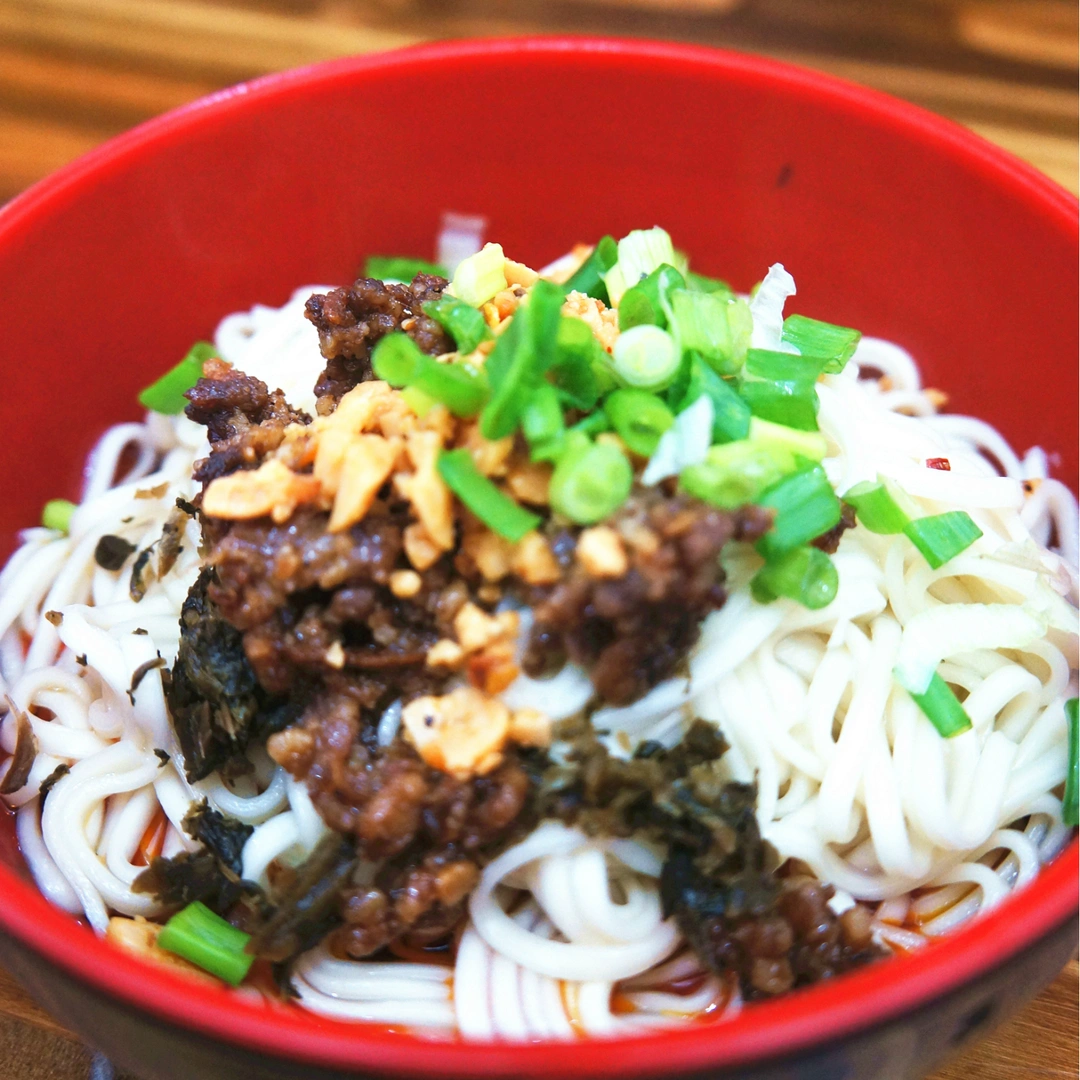
- Dan dan noodles – Life-changing. Seriously. The ones I'd eaten in Beijing suddenly tasted like bland imitations. The Sichuan peppercorns hit my tongue with a numbing, tingling warmth that I'd never experienced before. [Link: Best dan dan noodles in Chengdu]
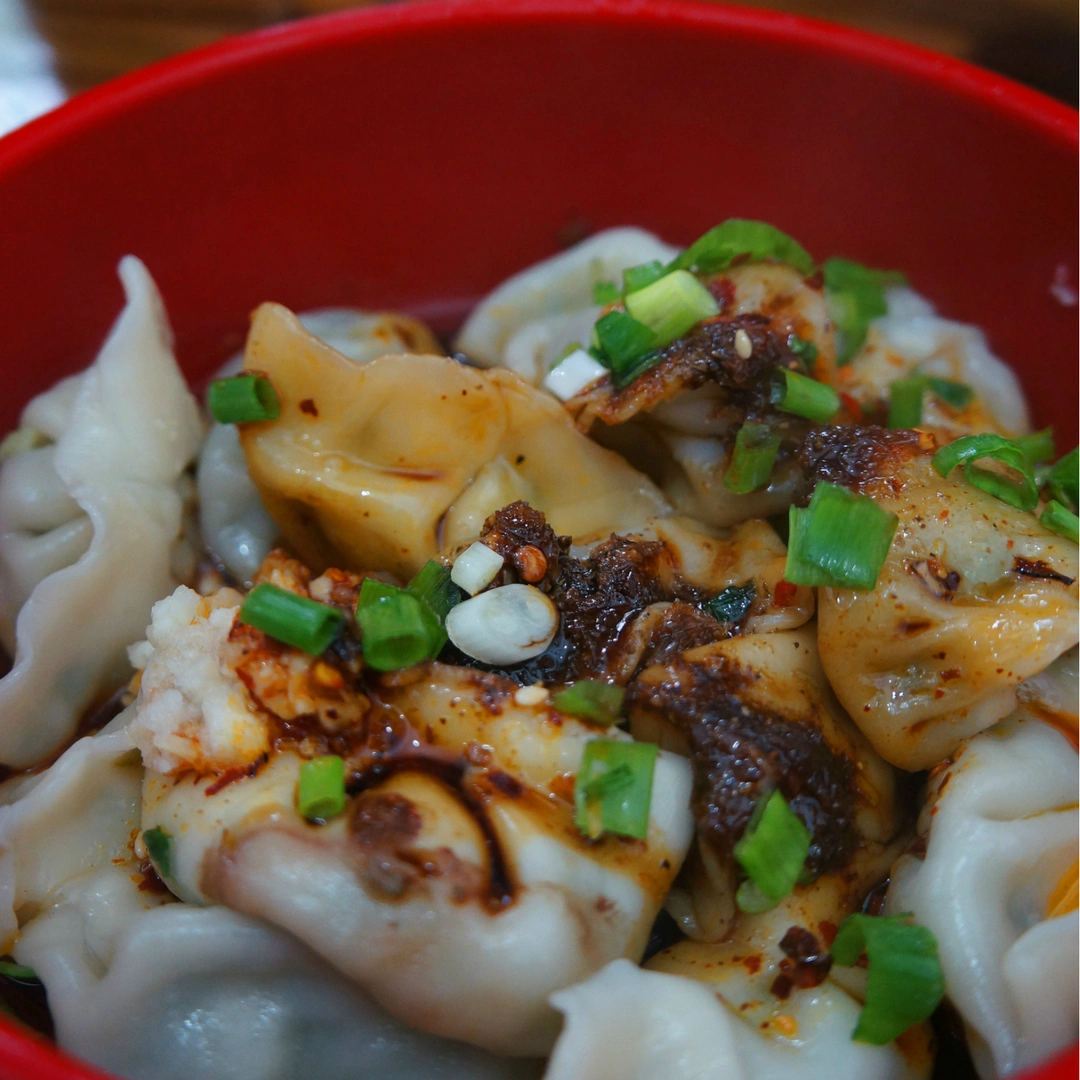
- Red oil dumplings – Beautiful to look at, but brutally spicy for a Beijing-adjusted stomach. I cried a little. (The good kind of crying.)
- Yu Xiang shredded pork fried rice – Decent, but forgettable. The pickled radish on the side stole the show.
I was still a Beijing stomach at this point. Give me a day, I told myself. I'll adapt.
Wandering Wenshu Monastery
After breakfast, my husband headed off to work, and I was dropped off at Wenshu Monastery—or rather, at the food street nearby. Let's be honest: I followed my nose.
The Wenshu Food Street was a carnival of smells and colors. Stalls lined both sides, offering everything from candied fruits to mysterious fermented blocks that looked like they could set your mouth on fire. One vendor sold what appeared to be spicy fermented tofu. I imagined it stuffed inside a steamed bun. Heaven.
Because it was a weekday, the crowd was thin—just the way I like it. No jostling elbows. No impatient sighs. Just me, the food, and the occasional stray cat.
Highlights:
- Old Lady's Pig Trotters – Tender, fall-off-the-bone meat served with a side of chili dipping sauce. Not as famous as the one at People's Square, but satisfying nonetheless.
- Candied Glutinous Rice Balls – Like fried dough balls coated in caramelized sugar and sesame. Crunchy on the outside, chewy on the inside. I didn't love them, but I'm glad I tried.
The Monastery Itself
Wenshu Monastery is a Buddhist temple in Chengdu with distinctive red brick walls. I almost missed the ticket office—it's tucked away in such an unassuming corner that I walked past it twice. The grounds were quiet, peaceful, and perfectly complemented by Chengdu's humid, temperate air.
The staff moved with a meditative slowness. Even the cleaning lady looked like she belonged in a painting.
Pro tip: If you want photos without tourists, go on a weekday morning. I managed to capture the main courtyard almost empty—a rare feat in any Chinese attraction.
Day 3: The Art of Doing Nothing – Chengdu Slow Living
A Morning at the Mall (Sort Of)
I took the metro to Meimei Plaza, a high-end shopping center that felt more like a museum than a mall. The sales assistants greeted me at the door. They smiled when I entered and thanked me when I left. It was almost unnerving.
The clientele was impeccable—Chengdu women have this effortless elegance that I can only describe as "naturally polished." Their skin glows. Their style is understated but confident. I felt like a tourist from another planet.
I didn't buy anything. (My husband would have killed me if I came home with a designer bag.) Instead, I wandered into a nearby café called "Xie Xie Jiao" —a cozy, two-story space filled with books, warm lighting, and the kind of quiet that makes you want to stay forever.
An elderly man sat in the corner, completely absorbed in his reading. I never saw his face. I like it that way.
What I learned: Chengdu's beauty isn't in its attractions—it's in its moments. A cup of coffee. A good book. The sound of rain on the window. Don't rush.
The Night We Fell in Love with Chengdu Hotpot
My husband returned from work exhausted and hungry. "I need something real," he said. So I pulled out my phone and searched for the highest-rated hotpot place nearby.
Laoma Tou Hotpot was the answer.
The moment we walked in, the smell hit us—a cloud of Sichuan pepper, chili oil, and garlic that made our mouths water instantly. The restaurant was packed, even on a Tuesday night. We waited twenty minutes for a table, and every second was worth it.
What we ordered:
- Duck intestines – A must-order. They cook in seconds and have a satisfying crunch.
- Bullfrog – My personal obsession. In Chengdu, bullfrog is half the price it is in Beijing. I ate an entire bowl by myself.
- Beef tripe – Chewy, flavorful, perfect with the dipping sauce.
The dipping sauce debate: In Beijing, I'm a sesame sauce person. But here, the sesame sauce tasted... wrong. Too sweet, maybe? The waiter recommended a simple mix of sesame oil, minced garlic, and chopped cilantro. It was a revelation. The oil coats your tongue and protects it from the spice, while the garlic adds a sharp kick.
Why Chengdu hotpot is different: It's spicy, yes. But it's not painful. In Beijing, spicy food makes my stomach churn and my throat burn. In Chengdu, the heat is warm, numbing, and somehow soothing. I woke up the next morning feeling fine. I can't explain it, but I suspect Chengdu's climate has healing properties. [Link: Best hotpot restaurants in Chengdu]
Day 4: Kuanzhai Alley – Where Old Meets New
Morning in Mr. Wide Alley
I let myself sleep in. No alarms. No plans. When I finally rolled out of bed, I took a taxi to Kuanzhai Alley (literally "Wide and Narrow Alleys").
I have a theory: Kuanzhai is a man, and Zhai Alley is a woman. Kuanzhai is broad, confident, and open. Zhai Alley is intimate, detailed, and mysterious. Together, they form a perfect balance.
What I loved:
- The architecture – Traditional Qing Dynasty courtyard houses reimagined with modern glass, steel, and minimalist design. It's not "authentic" in the historical sense, but it's beautiful.
- The street art – A photography exhibition lined the walls, showcasing everyday life in Chengdu over the past decade. Some photos made me laugh. Others made me tear up.
- The cats – There's a famous lazy cat that naps in the same spot every day. I found her. She didn't move. I took ten photos.
Food highlights:
- Mango and vanilla gelato – From a small Italian-style shop near the entrance. Creamy, refreshing, and the perfect antidote to the morning's spicy breakfast.
- "Sad" Cold Noodles – I ordered these because the name intrigued me. Big mistake. They were so spicy that I started crying halfway through. A couple sitting nearby saw my reaction and immediately canceled their order. "Don't do it," I wheezed. They thanked me.
- Pig's Trotters – Found at a side stall. Tender, gelatinous, and coated in a sticky chili glaze.
FAQ: Everything You Need to Know About Traveling to Chengdu
1. What is the best time to visit Chengdu?
The best time to visit Chengdu is spring (March to May) and autumn (September to November) when the weather is mild and comfortable. Avoid summer if you're sensitive to humidity, and winter if you dislike gray skies. October is particularly beautiful for Chengdu travel.
2. What are the must-try foods in Chengdu?
You cannot leave Chengdu without trying: - Dan dan noodles – The benchmark for Sichuan noodles - Chengdu hotpot – A communal dining experience like no other - Mapo tofu – Silky tofu in a fiery chili bean sauce - Kung Pao chicken – The original, and it's nothing like the Western version - Rabbit head – A local delicacy for the adventurous eater
3. How many days do you need in Chengdu?
For a thorough Chengdu itinerary, plan for 4–5 days. This gives you time to explore the city's food scene, visit Wenshu Monastery and Kuanzhai Alley, and take a day trip to see the giant pandas at the Chengdu Research Base of Giant Panda Breeding. [Link: Chengdu 5-day itinerary]
4. Is Chengdu expensive for tourists?
Chengdu is surprisingly affordable compared to Beijing or Shanghai. Street food meals cost around 10–20 RMB ($1.50–$3 USD). A hotpot dinner for two runs about 150–250 RMB ($20–$35 USD). Accommodation and transportation are also budget-friendly.
5. What makes Chengdu different from other Chinese cities?
Chengdu is famous for its slow-paced lifestyle. Locals prioritize leisure, tea drinking, and mahjong over hustle culture. The city's culinary scene is legendary, and its people are known for being warm and welcoming. It's a city that invites you to stay a while.
Internal Linking Suggestions
- [Link: Best Chengdu street food guide]
- [Link: How to eat hotpot like a local]
- [Link: Top 10 things to do in Chengdu]
- [Link: Wenshu Monastery visitor guide]
- [Link: Kuanzhai Alley photo spots]
Conclusion: Why You Need to Get Lost in Chengdu
I came to Chengdu as a reluctant tagalong on a business trip. I left with a piece of my heart permanently lodged in its humid, peppery air.
Chengdu taught me that travel isn't about checking boxes. It's about letting go. It's about waking up without an alarm, following your nose to a bowl of noodles, and spending an afternoon watching a cat sleep in the sun.
If you're planning a trip to China, don't skip Chengdu. Don't rush it. Give yourself time to get lost in its alleys, to cry over its cold noodles, and to fall in love with its unhurried rhythm.
Ready to experience the city of slow living? Book your trip to Chengdu today. Leave your itinerary at home. Bring your appetite. And prepare to be lost—in the best possible way.
Have you been to Chengdu? What was your favorite moment? Share your story in the comments below!
You may also like


