Crossing Southern Xinjiang: A Family's 10-Day Silk Road Adventure – Ultimate Travel Guide
Meta Description: Discover how the Xu family conquered Southern Xinjiang in 10 days. From Kashgar to Turpan, this SEO-optimized guide covers border permits, safety tips, hidden gems, and family-friendly Silk Road adventures. Plan your trip now.
Introduction: Why Southern Xinjiang Should Be Your Next Family Adventure
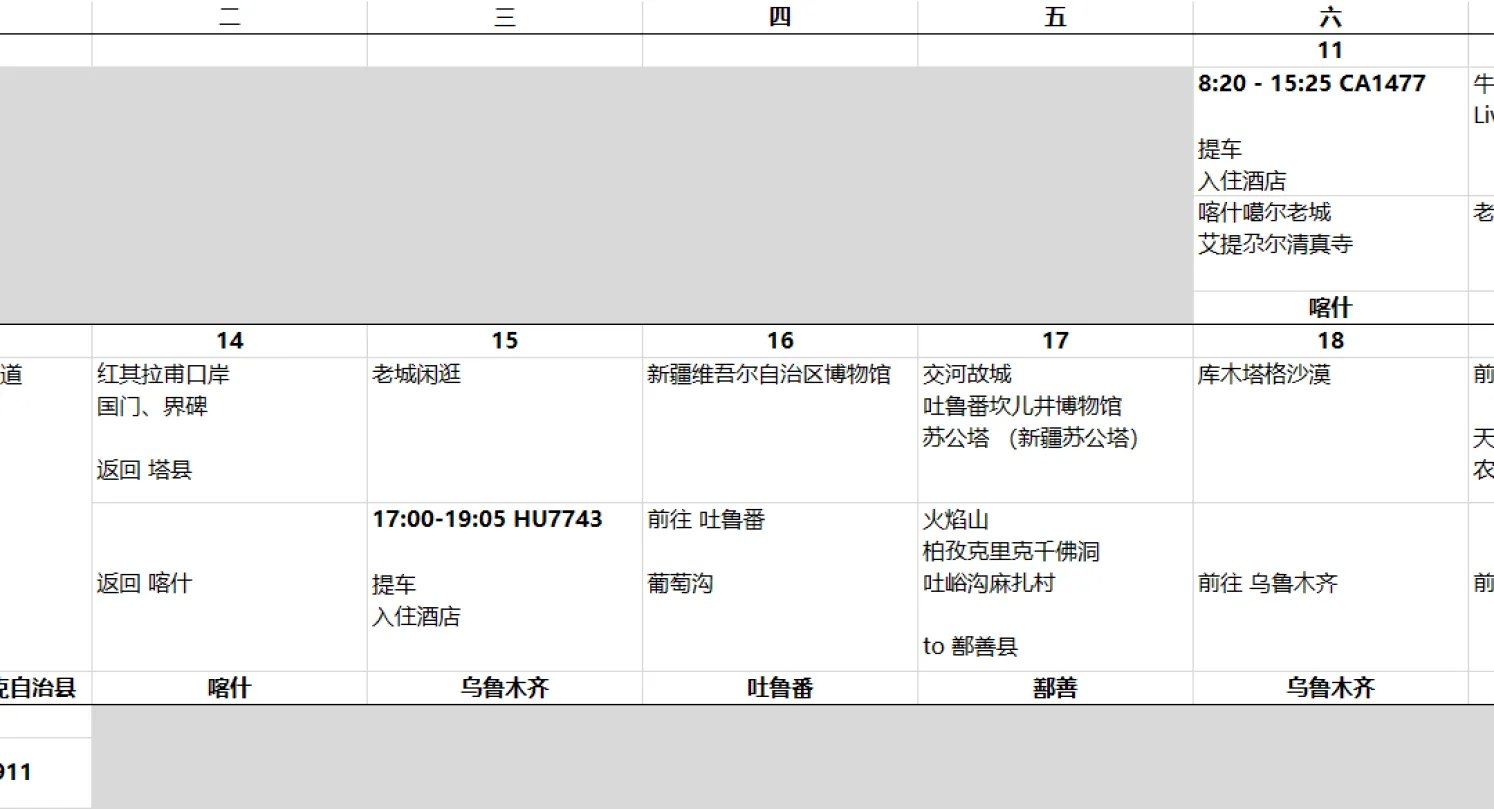
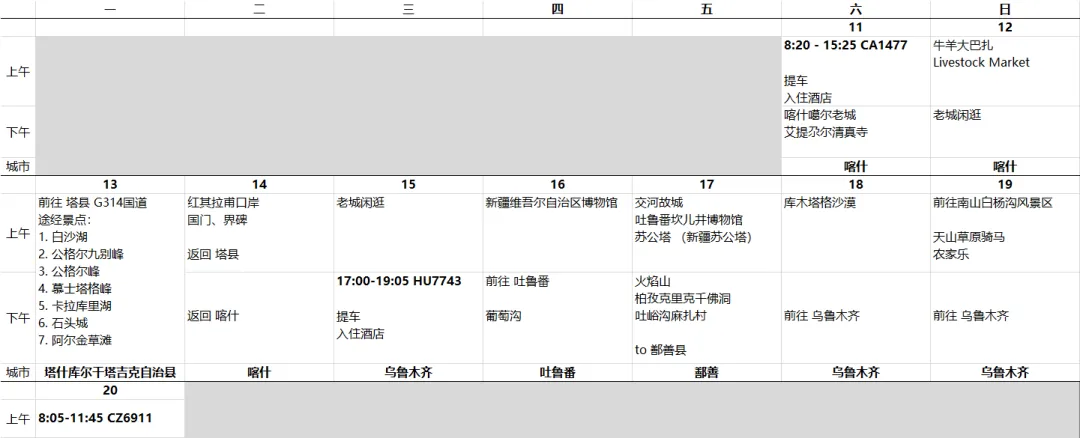
In the summer of 2018, the Xu family completed a journey that made countless travelers green with envy. They spent 10 days traveling from Kashgar to Tashkurgan, from the Khunjerab Pass to Turpan, crossing half of Xinjiang. This was no impulsive, spur-of-the-moment trip, but a meticulously planned adventure three months in the making.
The story began with CCTV's 100-episode documentary series "Borderlands Journey." The family of three watched all 80-plus hours of programming without missing a single episode. When the parents asked where their son wanted to go for summer vacation, the answer came instantly: "Xinjiang!" The reasons poured out in a hilarious list: lamb rib pilaf, lamb skewers, grilled fish, shaved ice, mare's milk, kvas, horseback riding, Boundary Marker No. 7, the Little White Poplar Border Post, Kazakh falconry, Tashkurgan ice cream, Horgos lavender fields. This combination of "foodie plus explorer" was destined to make the trip unforgettable.
Xinjiang is enormous — covering one-sixth of China's landmass. The Xu family decided to break it into pieces, focusing on two routes: the southern "Scenic Route" — Kashgar, Tashkurgan, and Khunjerab Pass; and the central "Traditional Route" — Ürümqi, Turpan, and Shanshan. A nine-day whistle-stop tour sounds crazy, but as they put it: "Since we've come all this way, let's go all out!"
[Link: Best time to visit Xinjiang]
Pre-Trip Preparation: Insider Tips to Save You Trouble
Weather in Southern Xinjiang: Four Seasons in One Day
August in Xinjiang is a symphony of fire and ice. In Kashgar, daytime temperatures hit 34°C, but shade offers pleasant relief. In Tashkurgan, it's 30°C during the day, plunging to 10°C at night. At Khunjerab Pass, daytime barely reaches 10°C, and nighttime can drop below 5°C. Turpan and Shanshan are in "oven mode" — 35-38°C during the day, and 26-30°C at night. Bring short sleeves, long sleeves, and a jacket — you'll need all three.
Safety in Xinjiang: More Secure Than You'd Think
Many people have concerns about Xinjiang, but the Xu family's firsthand experience tells a different story: every hotel has luggage screening and security guards, and patrol teams and police cars are everywhere inside and outside tourist sites. Key intersections in Kashgar, Tashkurgan, Ürümqi, Turpan, and Shanshan have 24/7 police patrols. In a word: perfectly safe.
Border Permits for Tashkurgan: Only Available Here
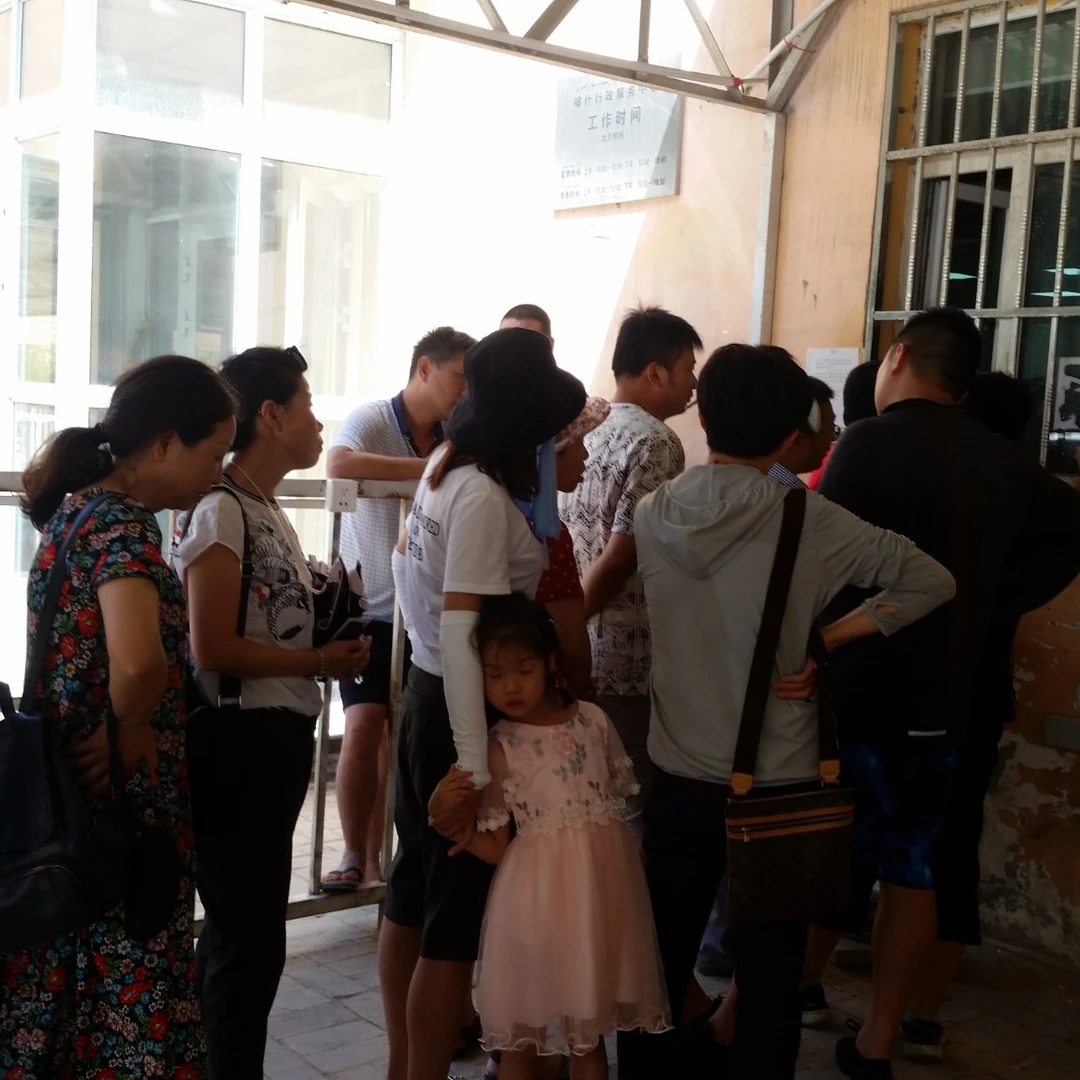
Want to visit Tashkurgan and Khunjerab Pass? Your border permit must be obtained at the Kashgar Administrative Service Center. Navigable by GPS, it has a large paid parking lot. Open Monday through Friday for regular processing; weekends also work, but you'll need to take the "back door" — follow the park wall past the arcade. Weekend processing starts later; arriving at 4:30 PM puts you at the peak of the queue. The process is simple: they collect a batch of ID cards, process them all at once, then call out names. Each batch takes about 15 minutes.
Flights to Xinjiang: The Early Bird Gets the Worm
The Xu family chose open-jaw tickets to save time. Two months in advance, Air China mileage redemption was already unavailable, and economy class was nearly full fare. Pro tip: first class and business class are only a few hundred yuan more than full-fare economy, but they sell out fast. When flying into or out of Xinjiang, book the earliest flight possible to avoid delays and cancellations.
[Link: Xinjiang flight deals]
Car Rental in Kashgar: The "Hidden Menu"
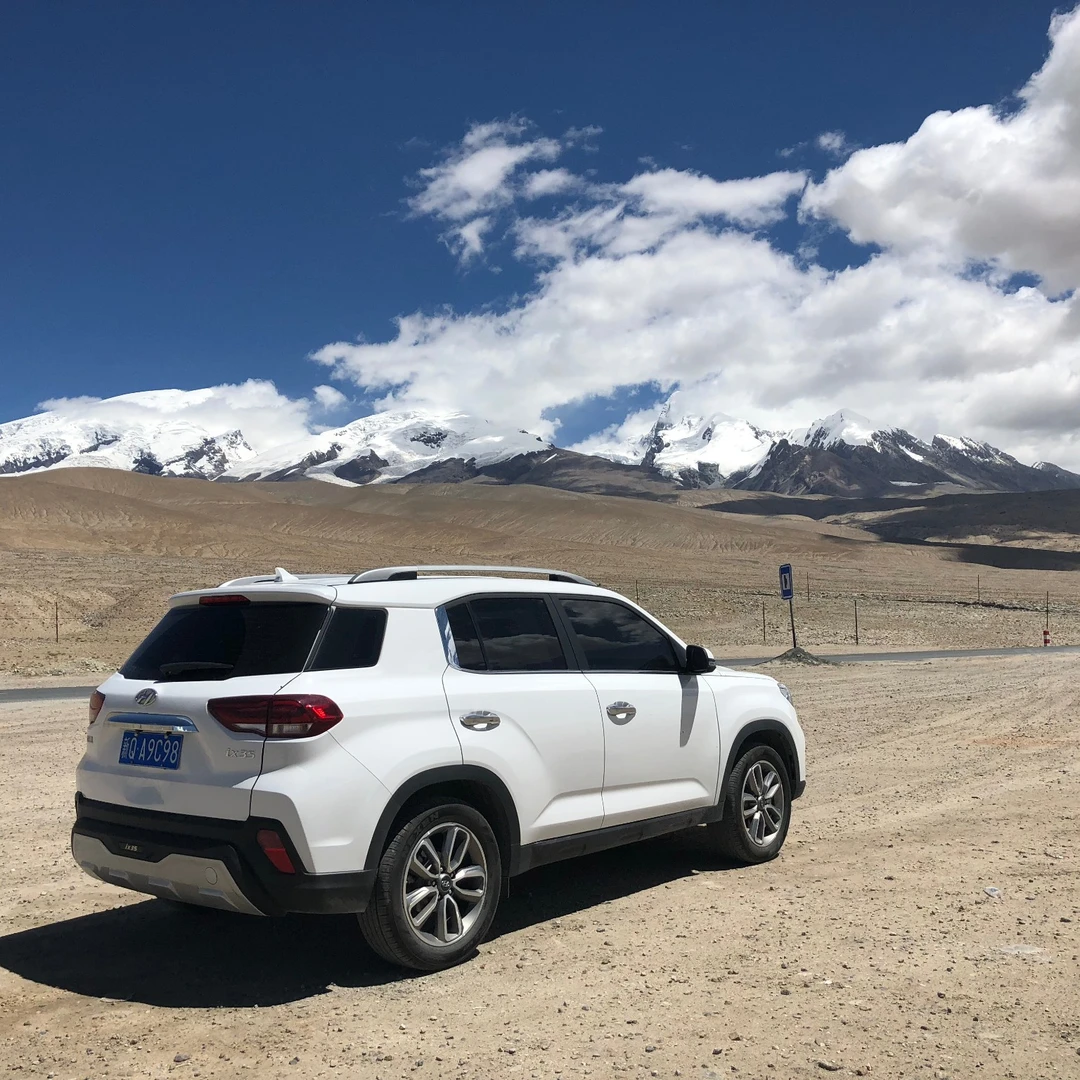
Kashgar has no major car rental companies! After scouring the entire internet, the Xu family only found "Kashgar Yida." Their originally booked Toyota Highlander was swapped for a Hyundai ix35, with the price dropping from over 600 to 400 yuan. As it turned out, Southern Xinjiang's roads are surprisingly good — even a sedan handles them with ease. The rental counter is inside Gate 1 at the Kashgar Airport arrivals exit; picking up the car takes just five minutes. The young agent gave a special reminder: most roads in Kashgar have a 40 km/h speed limit. No wonder Baidu Maps showed 289 kilometers taking six hours.
For Ürümqi, they chose Shenzhou Car Rental, with the pickup point at a nameless supermarket behind the Tianyuan Hotel — convenient for grabbing water and snacks.
Other Essential Tips for Xinjiang Travel
- Cash: Don't bring a single yuan! Everything is WeChat Pay — even horse owners on the grasslands take payments via WeChat.
- Water: In August's Xinjiang, under the blazing sun, water is your lifeline. Stock up on one or two cases right after picking up your car.
- Hotels: Options for every budget, free parking, and twin beds where one bed can comfortably fit one adult and one child.
Day One: Kashgar — The Joy of Slowing Down
Flying from Beijing to Kashgar, with a stopover in Ürümqi, the Xu family arrived right on time at 3 PM. Kashgar Airport serves both civilian and military purposes — if you're into fighter jets, keep your eyes peeled. Deplaning, collecting luggage, picking up the car — all done in one smooth motion.
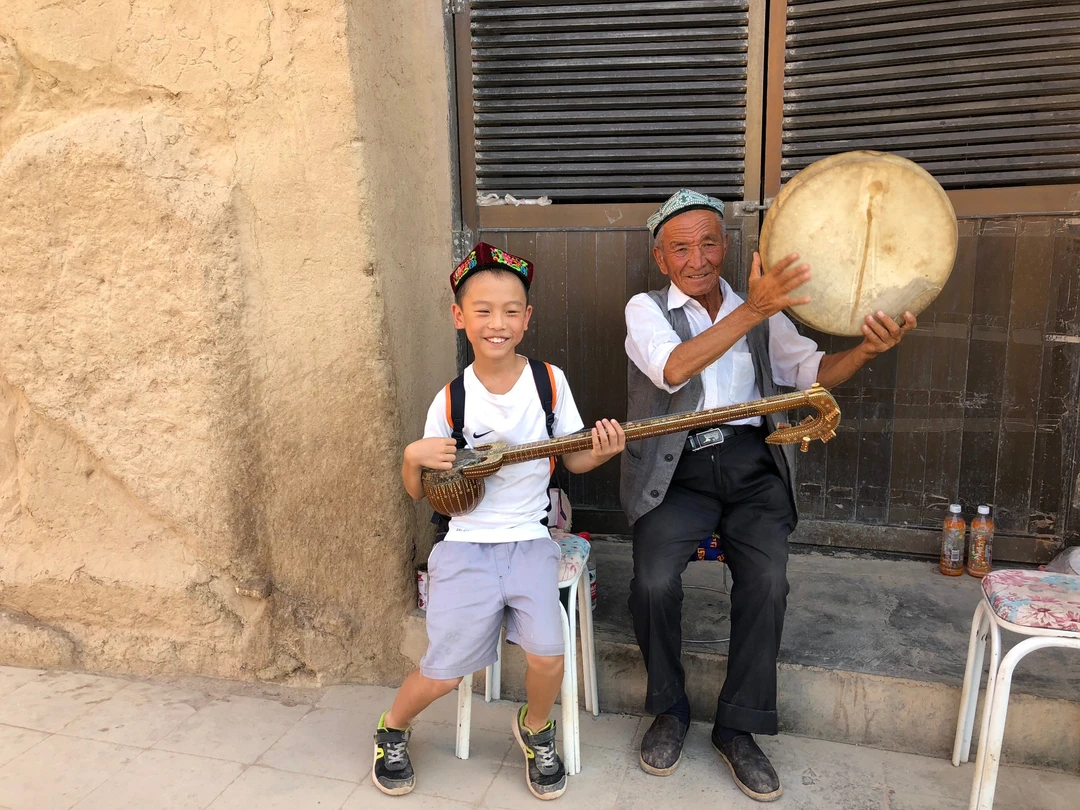
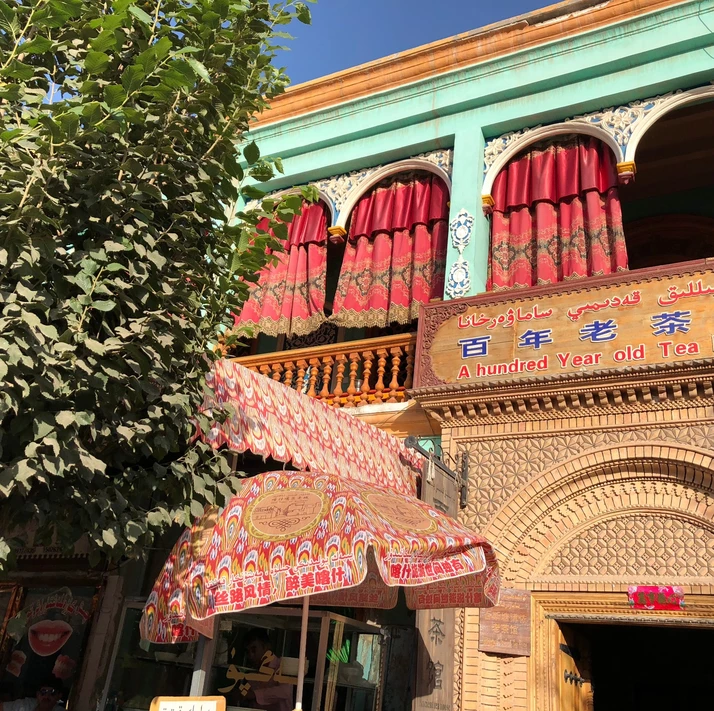
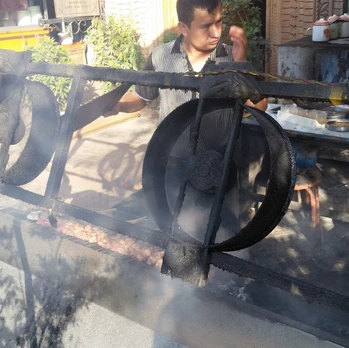
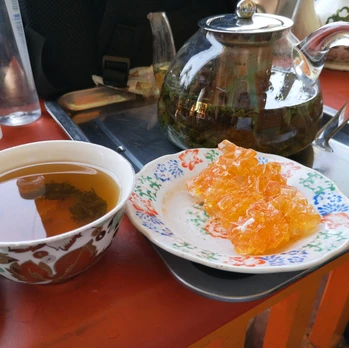
First stop after getting the car: getting the border permit. With that done, they headed straight for the Century Old Teahouse. But before they could even go upstairs, the lamb skewers being grilled downstairs pinned them to their seats for a feast. Upstairs, they ordered mint tea to cut the grease, chewing on sugar crystals while waiting for the elderly Uyghur musicians to start playing. The guidebooks say not to eat too much, but who can resist? Stuffed buns, yogurt, fruit, and yogurt shaved ice from the Id Kah Mosque square — they said "extra yogurt, less ice, we'll pay more" three times, but nobody understood.

The Id Kah Mosque is small and not particularly ornate, but it's famous throughout the Islamic world. They caught part of a guided tour: a female Muslim devotee who prayed her entire life, giving everything she had to the mosque, never marrying, until her sixties. Her story moved Islamic elders so much that they invited her to Mecca, opening the door for women to enter mosques for the first time.
Leaving the mosque, they dove into the night market. First, a glass of pomegranate juice — and it was shockingly astringent. Where was the promised sweetness? The night market had plenty of food, but what they craved most was a specialty restaurant like Jinyu Meishi, which they visited three times. Watermelon juice, cucumber shreds, and cold jelly noodles were particularly delicious, and the hygiene was acceptable.
At 9 PM, as the sun was setting, they drove back to the hotel. The impression of that first day in Xinjiang came down to one word: slow. The entire city had a 40 km/h speed limit, phone signals were on E, and they got excited when 3G occasionally appeared. Being forced to slow down in every way was jarring at first. But then they thought: life shouldn't always be in such a hurry.
[Link: Kashgar travel guide]
Day Two: The Livestock Bazaar — The Most Authentic Local Flavor
At dawn, stepping onto the damp earth, the Xu family set off for Southern Xinjiang's largest livestock bazaar. Search for "Huangxiang Village" on your GPS, then follow the three-wheeled motorbikes loaded with black-and-white spotted lambs — and you'll find it. Sunday is the biggest day, with peak activity between noon and 1 PM.
The entrance leads to the cattle trading area, with the sheep section further in. The cattle stand two meters tall — keep a close eye on children. Vendors use steel brushes to make the wool smooth and shiny; buyers pry open sheep mouths to check teeth, squeeze rumps, and heft them to gauge weight. Watching the rapid-fire bargaining and the handshake deals, the family found themselves grinning along.
When hunger struck, the aroma of baked buns and lamb soup was irresistible. They sat on benches near the food stalls, eating freshly baked naan bread and drinking hot tea. The atmosphere was electric — a true glimpse into authentic local life.
Day Three: Kashgar to Tashkurgan — The Karakoram Highway
The drive from Kashgar to Tashkurgan along the Karakoram Highway is one of the world's most scenic routes. The Xu family left early, passing through stunning landscapes of snow-capped mountains, glacial valleys, and vast grasslands. The road conditions were excellent, and the scenery changed dramatically every few kilometers.
They stopped at Lake Karakul, a stunning alpine lake reflecting the Muztagh Ata peak. The water was crystal clear, and the air was crisp and cold. They took photos, breathed in the fresh mountain air, and continued their journey.
Arriving in Tashkurgan in the late afternoon, they checked into a local hotel. The town is small but charming, with a mix of Tajik and Uyghur cultures. They tried Tashkurgan ice cream — a local specialty — and wandered through the streets, enjoying the peaceful atmosphere.
[Link: Karakoram Highway road trip]
Day Four: Khunjerab Pass — The Roof of the World
The highlight of the trip was the Khunjerab Pass, the highest paved border crossing in the world at 4,693 meters. The Xu family drove from Tashkurgan, passing through stunning high-altitude landscapes. The road was well-maintained, but the altitude made breathing difficult — they took frequent breaks and drank plenty of water.
At the pass, they stood at the border between China and Pakistan, feeling a sense of awe. The wind was fierce, the temperature was below 5°C, and the snow-capped peaks stretched as far as the eye could see. They took photos at Boundary Marker No. 7 and visited the Little White Poplar Border Post, a symbol of China's border defense.
The return drive was equally breathtaking. They stopped at a few viewpoints, watching the clouds drift over the mountains. It was a day they would never forget.
Day Five: Tashkurgan to Kashgar — The Return Journey
The drive back to Kashgar was a chance to see the Karakoram Highway from a different perspective. The Xu family stopped at a few places they had missed on the way up, including a small Tajik village where they tried mare's milk and kvas. The locals were friendly and welcoming, and the children played with the local kids.
They arrived in Kashgar in the late afternoon, tired but happy. They spent the evening at the Century Old Teahouse again, enjoying mint tea and listening to Uyghur music. It was a perfect end to the southern leg of their journey.
Day Six: Kashgar to Ürümqi — The Central Route Begins
The next morning, the Xu family flew from Kashgar to Ürümqi, the capital of Xinjiang. They rented a car from Shenzhou Car Rental and headed to Turpan, the hottest city in China.
The drive from Ürümqi to Turpan took about three hours, passing through the Gobi Desert. The landscape was stark and beautiful, with red sandstone cliffs and vast stretches of sand. They arrived in Turpan in the late afternoon, checked into their hotel, and headed out to explore.
[Link: Turpan travel tips]
Day Seven: Turpan — The Oasis City
Turpan is famous for its grape vineyards, Karez irrigation system, and ancient ruins. The Xu family spent the day visiting the Jiaohe Ruins, an ancient city that dates back over 2,000 years. The ruins are well-preserved, and the views from the top are stunning.
They also visited the Karez Museum, which explains the ingenious underground irrigation system that has sustained life in Turpan for centuries. In the afternoon, they toured a local vineyard, tasting different varieties of grapes and learning about the winemaking process.
The heat was intense — 38°C — but the shade of the vineyards provided some relief. They drank plenty of water and took frequent breaks.
Day Eight: Shanshan — The Desert Frontier
The Xu family drove from Turpan to Shanshan, a small town on the edge of the Taklamakan Desert. They visited the Shanshan Desert Park, where they rode camels and sandboarded down the dunes. The kids loved it, and the parents enjoyed the stunning desert sunset.
They spent the night in a local guesthouse, eating lamb skewers and naan bread under the stars. It was a magical experience.
Day Nine: Shanshan to Ürümqi — The Final Leg
The drive back to Ürümqi was short but scenic. They stopped at the Astana Tombs, an ancient burial site that contains mummies and artifacts from the Tang Dynasty. The museum was small but fascinating.
They returned the rental car in Ürümqi and spent the evening at the Grand Bazaar, buying souvenirs and trying local snacks. The bazaar was bustling, and the atmosphere was electric.
Day Ten: Departure — Memories to Last a Lifetime
The Xu family flew back to Beijing, tired but happy. They had crossed half of Xinjiang, experienced four seasons in one day, and created memories that would last a lifetime. As they looked back on their journey, they realized that the best part wasn't the sights or the food — it was the time they spent together as a family.
Frequently Asked Questions (FAQ)
1. Is it safe to travel to Southern Xinjiang with children?
Yes. The Xu family found Xinjiang to be extremely safe. Hotels have luggage screening, security guards, and 24/7 police patrols at major intersections. As long as you follow local regulations and stay aware of your surroundings, it's a safe destination for families.
2. Do I need a border permit to visit Tashkurgan and Khunjerab Pass?
Yes. You must obtain your border permit at the Kashgar Administrative Service Center. It's open Monday through Friday for regular processing; weekends also work but require using the "back door" entrance. The process takes about 15 minutes per batch of ID cards.
3. What is the best time to visit Southern Xinjiang?
August is a popular time, but be prepared for extreme temperature variations — from 38°C in Turpan to below 5°C at Khunjerab Pass. Spring (April-May) and autumn (September-October) offer milder weather and fewer crowds.
4. Can I use WeChat Pay everywhere in Xinjiang?
Yes. Even horse owners on the grasslands accept WeChat Pay. You don't need to bring cash, but it's wise to have a small amount for emergencies.
5. What should I pack for a family trip to Xinjiang?
Pack layers: short sleeves, long sleeves, a jacket, and a warm coat for high-altitude areas. Don't forget sunscreen, sunglasses, a hat, and plenty of water. A power bank is essential, as phone signals can be weak in remote areas.
Ready to Plan Your Own Southern Xinjiang Adventure?
The Xu family's 10-day journey proves that Southern Xinjiang is a safe, family-friendly destination with incredible natural beauty, rich culture, and unforgettable experiences. Whether you're a foodie, an explorer, or a history buff, this Silk Road adventure has something for everyone.
Start planning your trip today! Book your flights early, secure your border permit, and prepare for the adventure of a lifetime. Southern Xinjiang is waiting for you.
[Link: Book Xinjiang tours] [Link: Xinjiang travel insurance] [Link: Family travel tips]
Note: This article is based on the Xu family's firsthand experience in August 2018. Road conditions, prices, and regulations may have changed since then. Always check the latest travel advisories and local guidelines before your trip.
You may also like


