Beneath the Sacred Peak: My Hidden Life in Genie's Shadow – A 25-Day Journey Into Tibet's Hidden Village
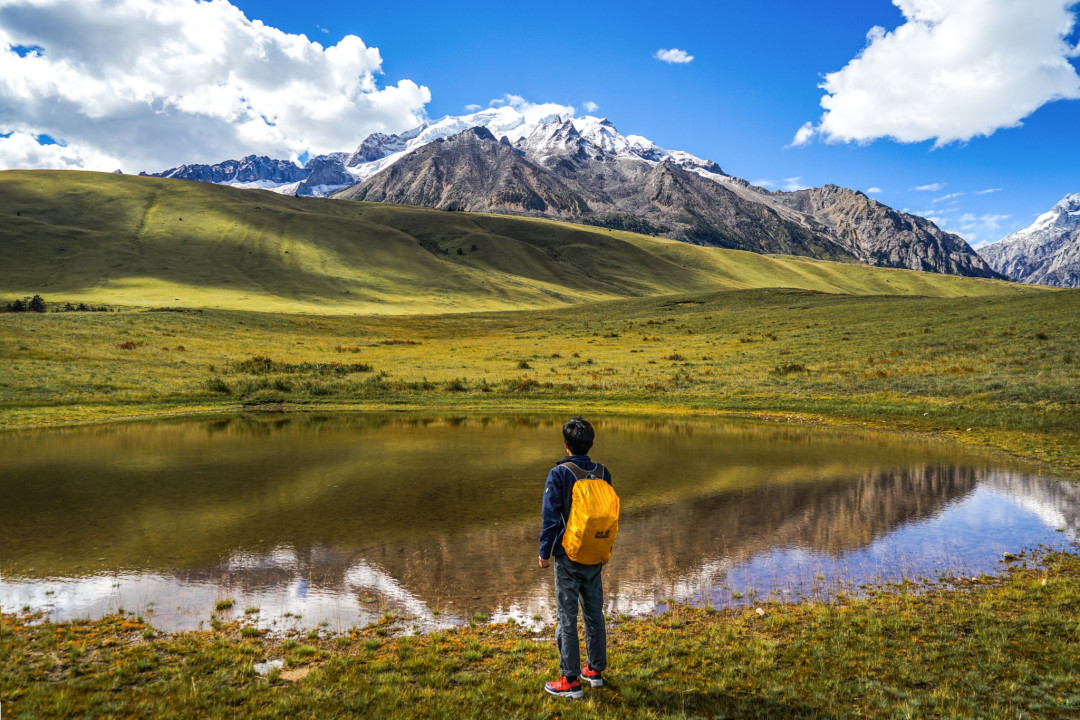
Meta Description: Discover the untold story of Zeba Village, hidden beneath Mount Genie in Litang County. Experience 25 days of Tibetan life, sacred peaks, and the real meaning of off-grid travel in this immersive travelogue.
Prologue: The Sunset I Didn't Capture
I was holding little Dingzhen Lhamo's hand as we walked along the village's concrete road. The evening sun crept up the snow-capped peak to our right, painting thin clouds and our faces in warm hues of orange. It was my tenth day in Zeba Village, and this was the first complete sunset I had witnessed. After countless days of waiting and disappointment, this golden moment arrived so unexpectedly—and of course, I had left my camera behind.
How ironic, I thought bitterly, completely unaware that in ten minutes the clouds would part again, revealing an even more spectacular scene. Without even my phone, I quickened my pace, hoping to dash back for my gear. But the little girl beside me remained blissfully unaware of my anxiety. She was too busy savoring the chocolate ice cream I had just bought her from the village shop, her small hand clutching mine as she ambled along.
I stopped. Looked at her contented face. And thought: Maybe this is the moment worth remembering.
Years from now, I suspect I won't miss the landscapes here half as much as I'll miss the days spent living alongside these people.
The Unplanned Escape: How We Found Genie's Shadow
It was September 2022—arguably one of the strangest years in recent memory. My cycling companion and I had been riding the legendary G318 highway when we found ourselves stranded in Litang County. With nowhere to go and no clear path forward, we made a decision that would change our perspective on travel forever: we chose to disappear into the mountains.
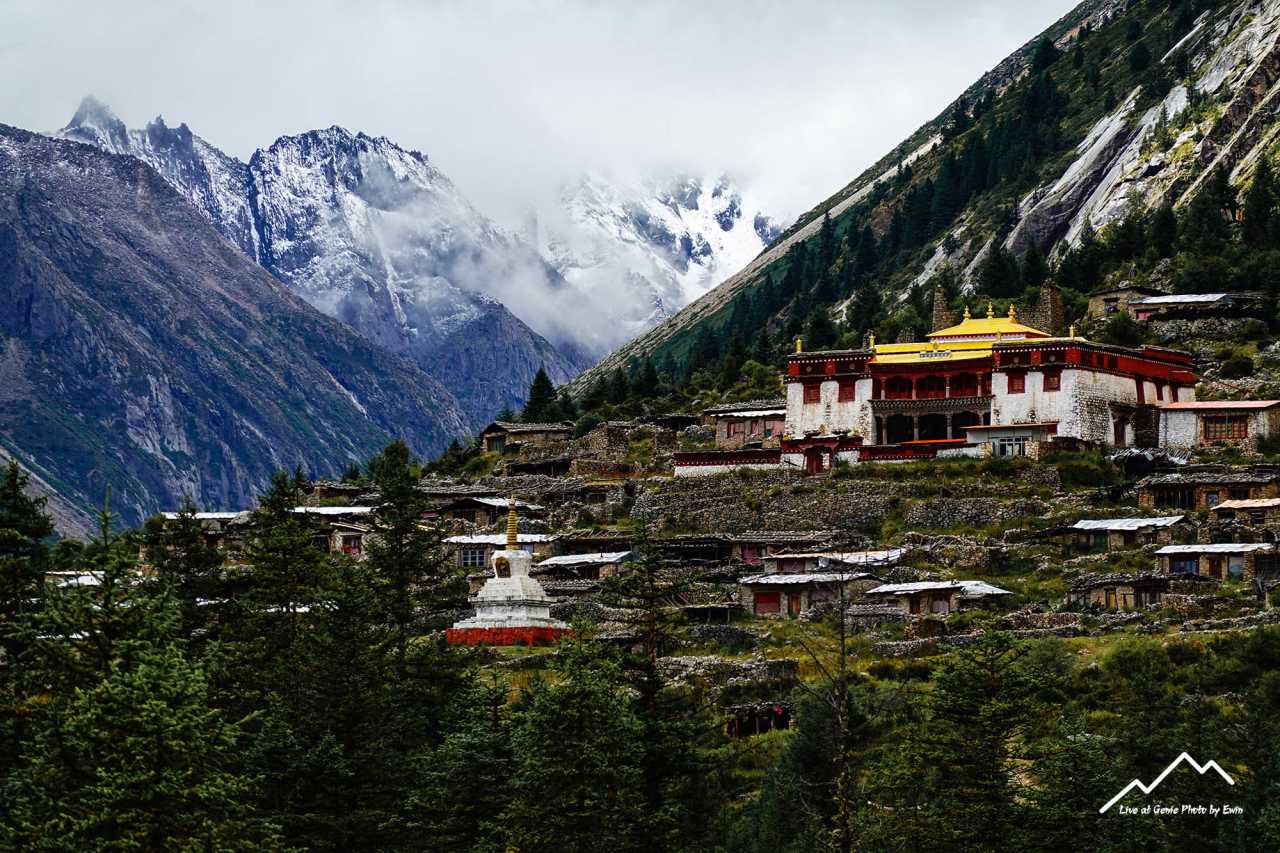
We headed to Zeba Village, nestled at the foot of Mount Genie—one of the most sacred peaks in Tibetan Buddhism. For the next twenty-five days, we lived with a local Tibetan family, sharing their meals, their routines, and their roof. There was no phone signal, no internet, and for several days, not even electricity. What we did have was the purest rainwater, the most intense sunlight, and the most genuine smiles we had ever encountered.
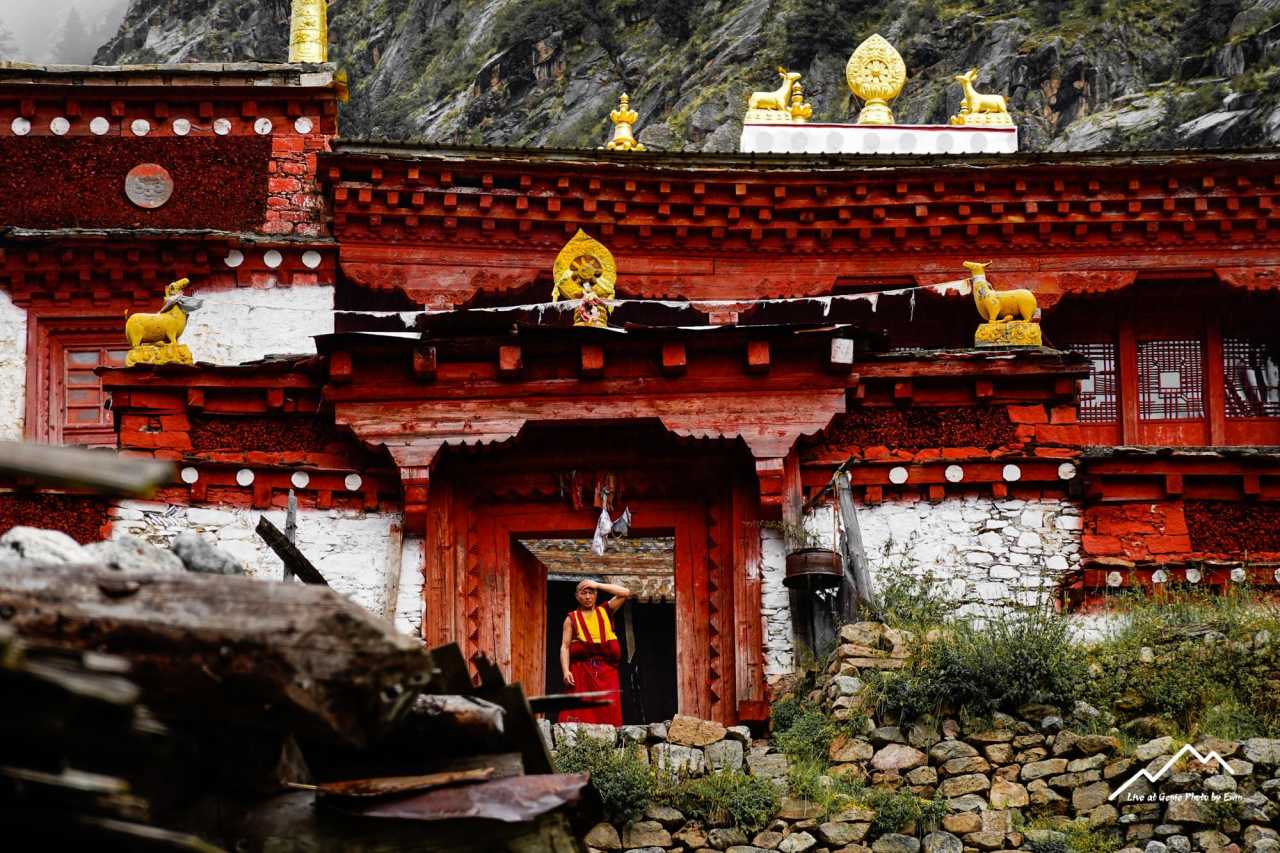
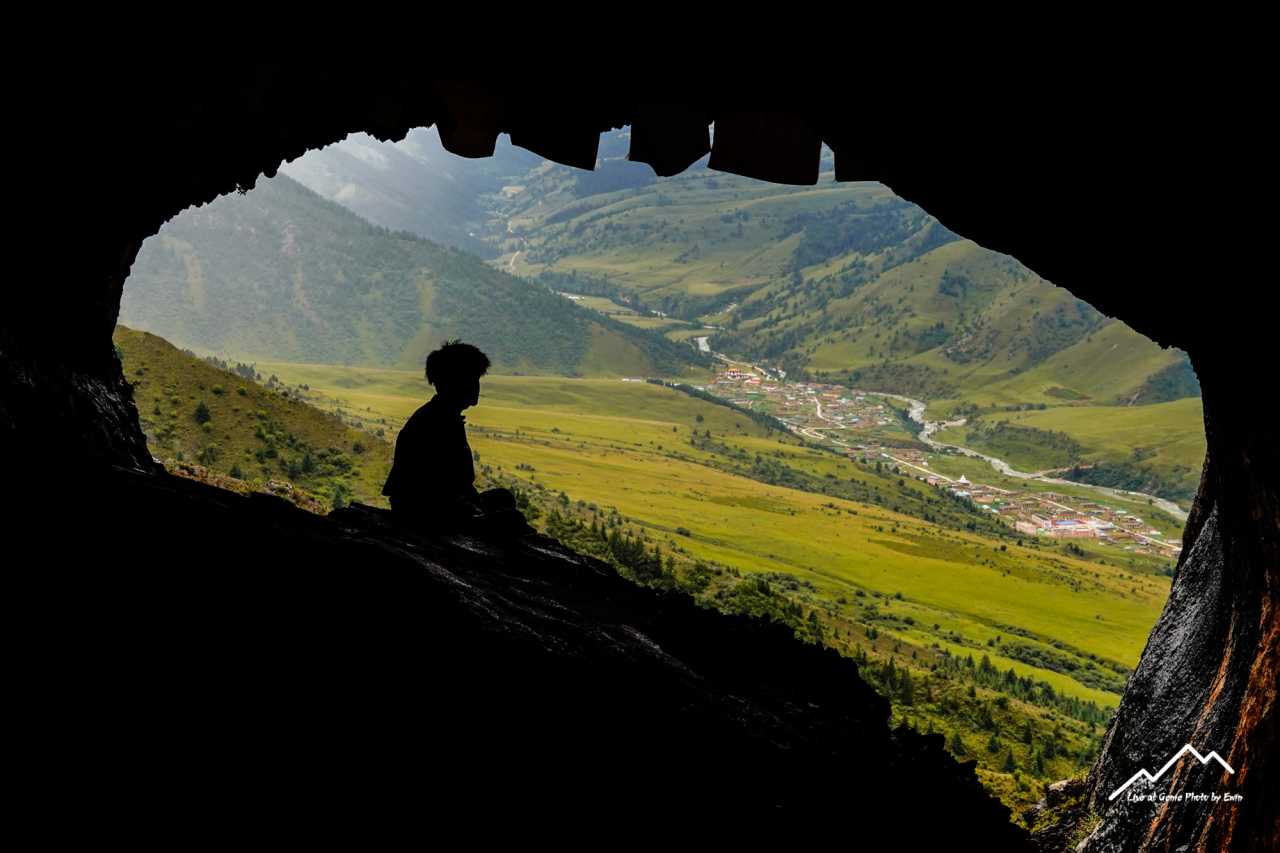
We fed horses, chopped firewood, burned dried yak dung for warmth, and harvested barley alongside the villagers. We explored every corner of the surrounding wilderness, discovered hidden meditation caves where monks once spent years in solitude, and stood beneath glaciers that had watched over this land for millennia.
Everyone has heard of "Genie's Eye" —the famous alpine wetland that resembles a giant eye staring at the sky. But how many know about "Genie's Left Eye" ? Without a local guide, you'd never find it. This is the story of that hidden world.
[Link: Best time to visit Litang County and Mount Genie]
Zeba Village: Where Time Stands Still
Arrival at the Edge of the World
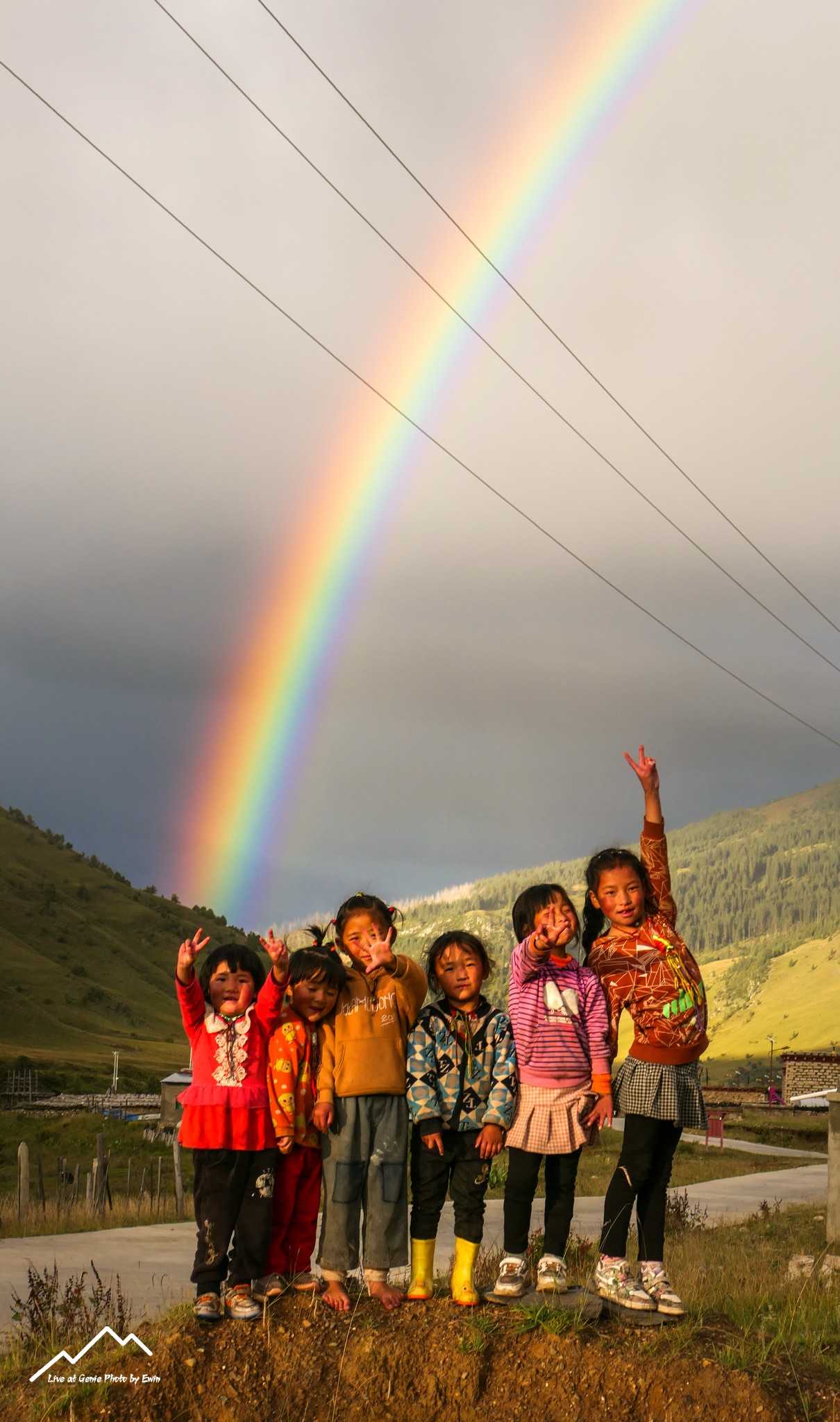
Zeba Village sits at the foot of Mount Genie, closer to the main peak than any other settlement. Yet it remains far less famous than its neighbor, Xiazetong Village—the hometown of the internet sensation Dingzhen. Speaking of that name: in these parts, "Dingzhen" is about as common as "John" in English. Out of every ten people, six or seven carry it. We met Dingzhen Nyima, Dingzhen Lhamo, Dingzhen Drolma, Dingzhen Chökyi... and our host's eldest son, Dingzhen Gyatso.

He picked us up from the county town, bringing his wife and child along from her parents' home. We crossed the rocky Tieshan Pass, followed a winding river valley, and after three or four bone-rattling hours, arrived at this small village nestled in a mountain hollow.
After warming ourselves by the fire at his house, we were taken to his parents' home—a larger building where his siblings, who spoke better Mandarin, also lived. While Gyatso could manage only a few Chinese phrases, his eighteen-year-old brother Tendzin Dorje was practically half-Han. He had traveled extensively, working on film crews across the country, and became our primary translator and cultural bridge.
The best Mandarin speaker, however, was the second sister, Nyima Lhamo. A university-bound student preparing for the college entrance exam, she spent her days studying, doing housework, and caring for her cousin's little girl—leaving little time for conversation with the strange visitors.
[Link: Tibetan homestay experiences in Sichuan]
Life Inside a Tibetan Home
Their father, Losel, welcomed us warmly into a typical Tibetan stone house. To block the winter wind, a small entryway had been built before the main door. The rectangular living room centered around a low table arrangement, with a stove at the head featuring three cooking rings—used respectively for cooking, boiling water, and heating butter tea, depending on proximity to the fire.
A long iron chimney pipe ran up to the roof. During heavy rain, we could hear water dripping back down, sizzling against the stove's inner walls. By the window stood a row of cushioned Tibetan benches—used for sitting during meals and converted into beds at night. Tendzin's parents slept here. The walls were lined with shelves holding Buddha statues, ornate teapots, and everyday essentials.
We slept in a separate room on the western side of the courtyard—an older house built when Tendzin's parents married. It was spacious enough for a dozen people, but only the two of us occupied it now. Loneliness was never an issue, though: every night, mysterious four-legged creatures performed parkour across the ceiling and walls. They never showed themselves, never stole anything—just occasionally left tiny paw prints on our phone screens. The family cat seemed to have an arrangement with them.
[Link: Traditional Tibetan architecture and home design]
The Courtyard and Its Characters
The courtyard was unpaved, covered in grass. To the left of the gate stood a stable, though most of the time it housed motorcycles rather than horses. The real horses were left to graze in the pastures. Yaks, however, were frequent visitors. Some belonged to neighbors and wandered in by mistake; others were nursing mothers brought home for milking, with their calves following close behind.
Milking a yak is an art form. The milk is used fresh, but more importantly, it becomes butter, yogurt, and cheese—staples of the Tibetan diet. Tibetan yogurt has a peculiar texture: the liquid whey separates from the creamy solids, leaving the former intensely sour and the latter bland. Tibetan butter, both in appearance and taste, resembles Western butter.
The toilet sat to the right of the gate. At night, with no courtyard lights, crossing the yard required careful navigation around yak and horse droppings. During the day, it was wise to memorize their locations.
On clear days, Mount Genie was visible from the courtyard. For an even better view, we climbed to the signal tower behind the village—though calling it a "signal tower" was generous. China Unicom had no presence here at all. There was no Wi-Fi in the house. I was truly living off the grid.
[Link: Tibetan yak farming and dairy products]
Village Life and Daily Routines
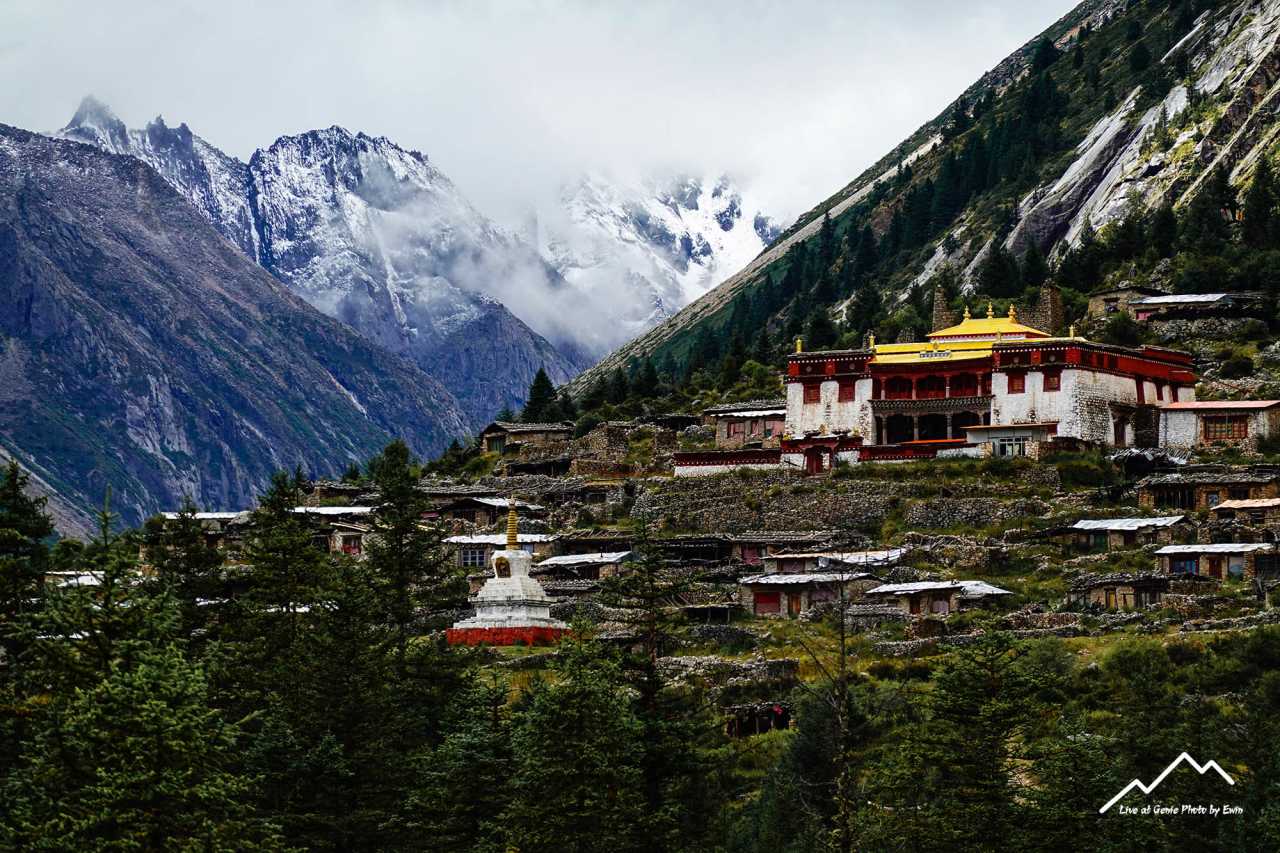
Zeba Village, formerly known as Chachongxi, belongs to Zhangna Township in Litang County. It houses 129 families—about 770 people. Built along a river in a mountain valley, it's a typical Khampa Tibetan settlement on the Sichuan-Tibet border. Most buildings are single-story stone houses, with mud mortar filling the gaps between rocks, thick fir beams supporting the structure, and rammed earth roofs. Newer homes, like Gyatso's, use cement bricks.
A two-to-three-meter-wide concrete road runs through the village—the only connection to the outside world. Colorful Gesang flowers line the path.
At the road's end stands a temple, empty most of the year. Only during Tibetan New Year do monks descend from the nearby Lenggu Monastery to hold ceremonies here.
Two stupas divide the village into upper, middle, and lower sections. Upper Zeba contains the densest cluster of houses, including the temple, the primary school, the village committee office, and our host family's home.
The school only covers grades one through three. For higher education, children must go to the county town.
Next to the school is the village's only shop—its sign misleadingly reads "Hotel Available." It's rarely open; you have to go to the shopkeeper's home to ask them to open it.
[Link: Tibetan festivals and cultural celebrations]
Hidden Wonders: Genie's Left Eye and Meditation Caves
One of the greatest rewards of staying with a local family was discovering places no tourist map marks. Tendzin Dorje led us to a hidden alpine wetland he called "Genie's Left Eye" —a smaller, more pristine version of the famous Genie's Eye. Without a guide, you'd walk past it a hundred times without noticing.
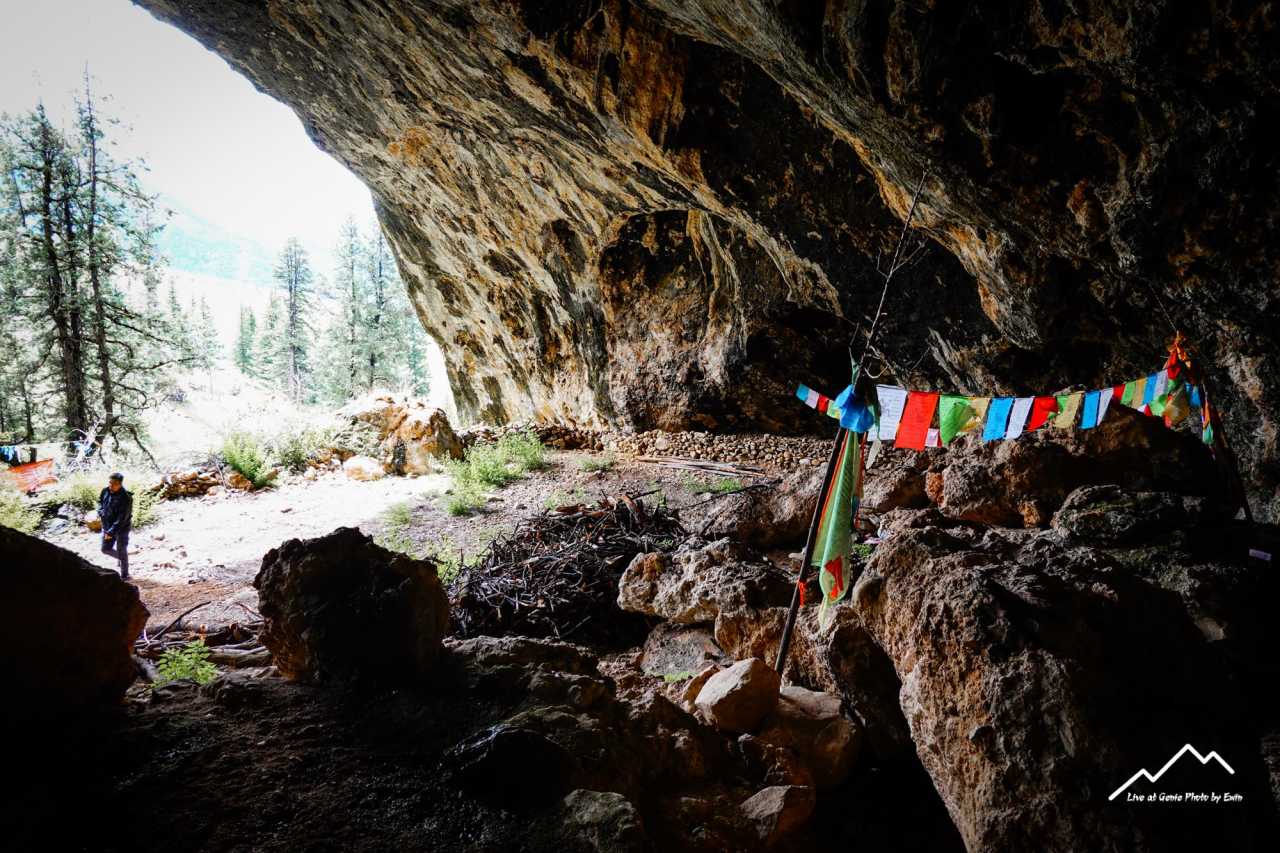
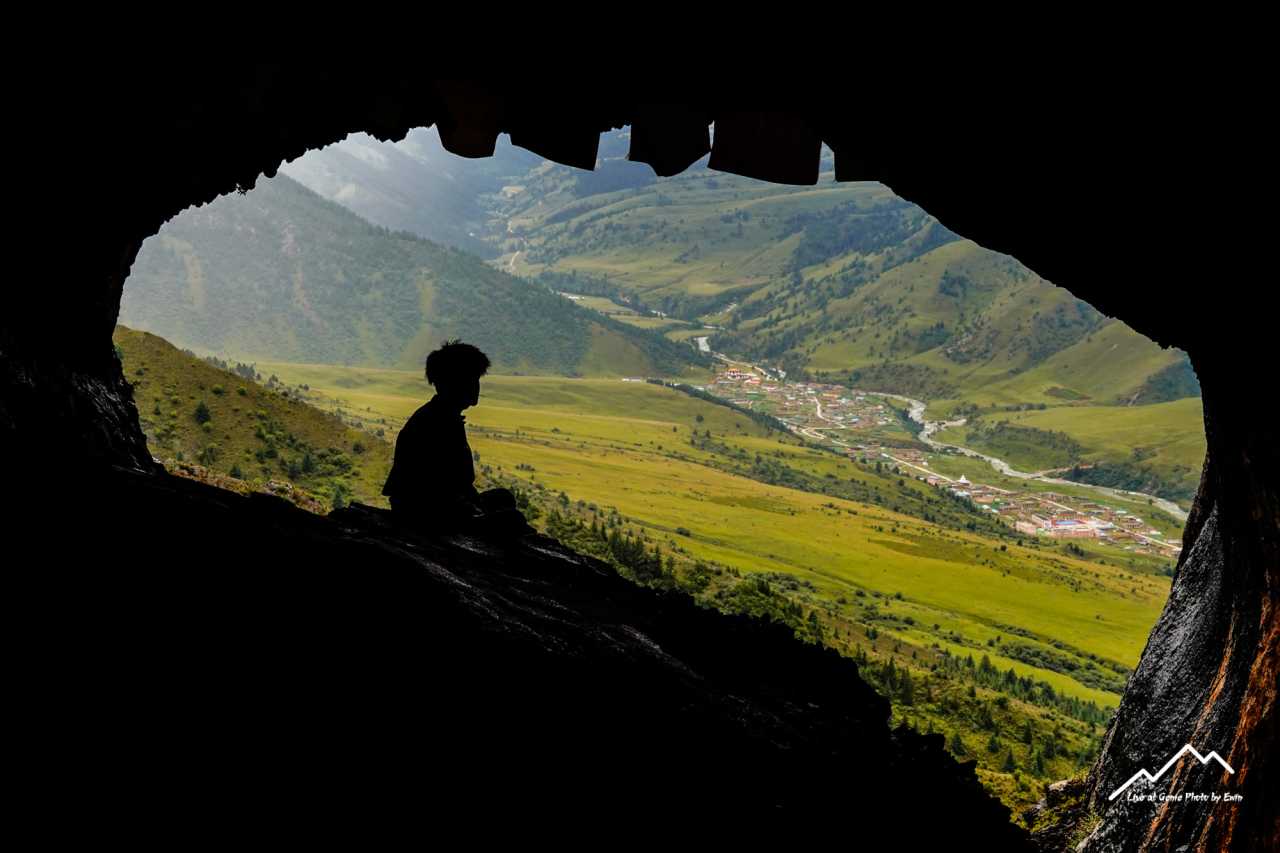
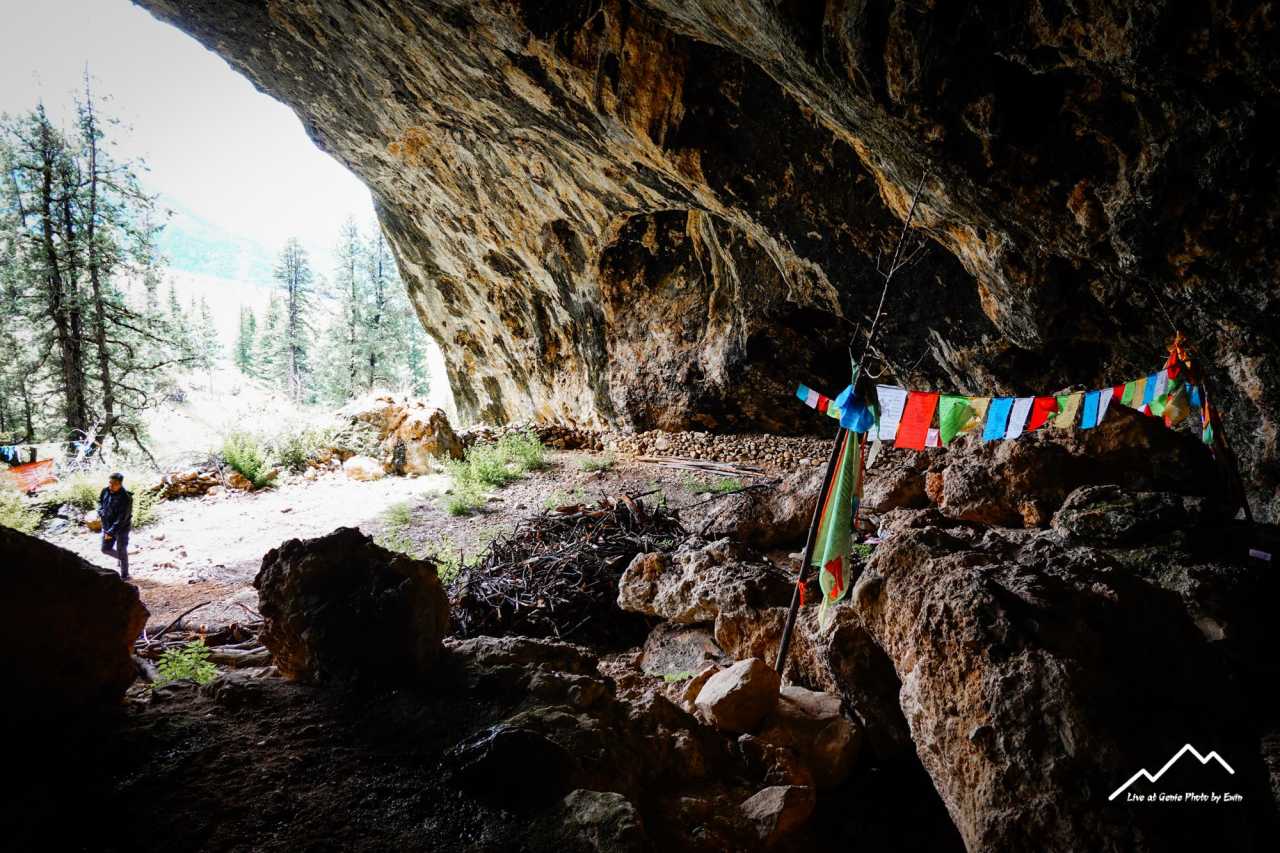
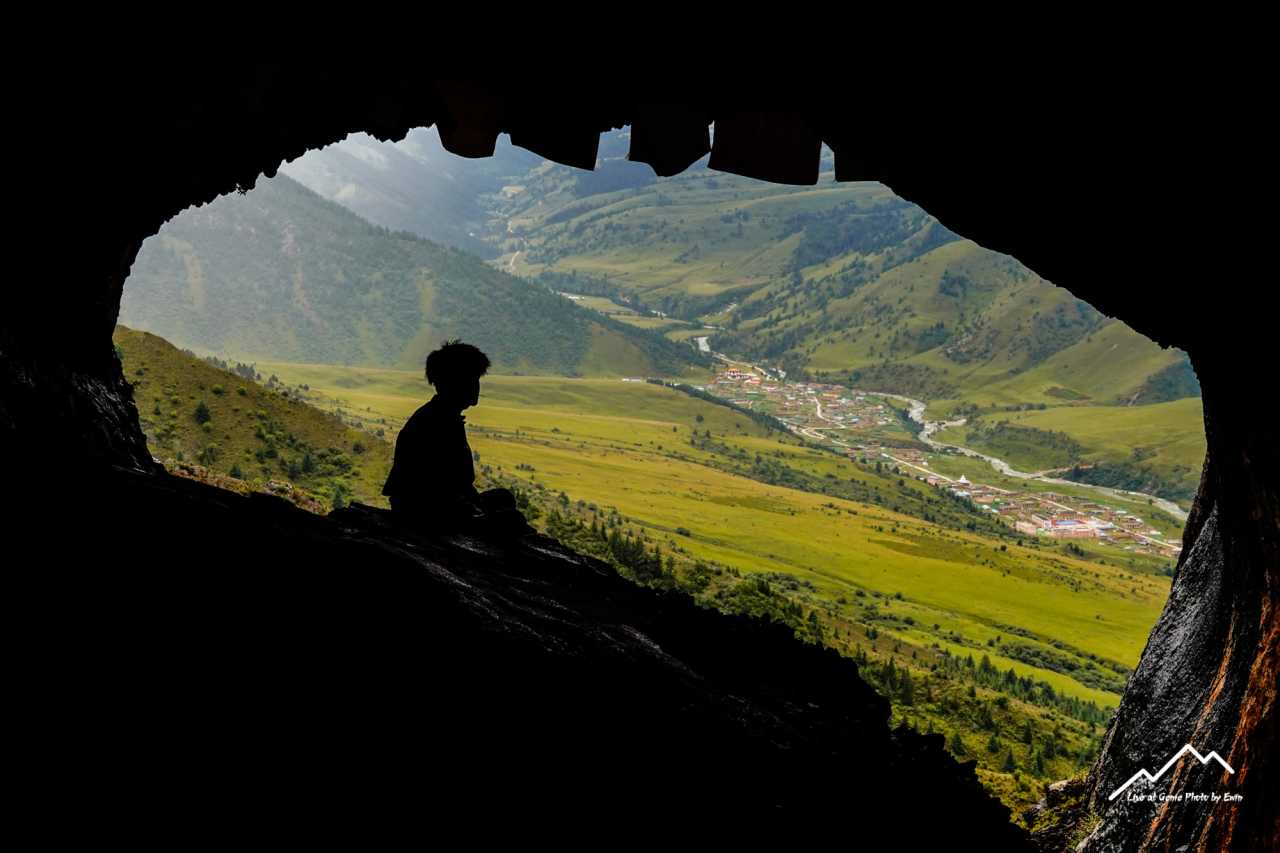
We also explored meditation caves where Buddhist monks once spent years in solitary retreat. These caves, tucked into cliff faces and hidden by prayer flags, offer a glimpse into the profound spiritual history of the region. The silence inside them is unlike anything I've experienced—a silence that feels alive.
[Link: Hidden gems of Litang County and Mount Genie]
Practical Tips for Visiting Zeba Village
How to Get There
- From Chengdu: Take the G318 highway to Litang County (about 2 days by bus or 1 day by car)
- From Litang County: Arrange a local driver or hitchhike to Zhangna Township, then to Zeba Village (3-4 hours on rough roads)
- Best transport: Private car or motorcycle; public buses are extremely limited
What to Bring
- Cash: No ATMs, no card payments. Bring enough for your entire stay.
- Power bank: Electricity can be unreliable
- Warm clothing: Even in summer, nights are cold at 4,000m elevation
- Headlamp: Essential for nighttime bathroom trips
- Patience: Internet and phone signal are virtually non-existent
Cultural Etiquette
- Greet with "Tashi Delek" (Tibetan greeting)
- Accept butter tea when offered; it's a sign of hospitality
- Remove shoes before entering homes
- Ask permission before photographing people or religious sites
[Link: Tibetan travel etiquette and cultural tips]
FAQ: Everything You Need to Know About Visiting Zeba Village
1. Is Zeba Village safe for solo travelers?
Yes, Zeba Village is extremely safe. Crime is virtually non-existent, and locals are welcoming to visitors. However, the remote location means medical facilities are far away. Travel with basic first aid supplies and ensure you have travel insurance covering high-altitude areas.
2. Do I need a guide to visit Zeba Village?
While not strictly required, a local guide is highly recommended. They can help with language barriers (many villagers speak only Tibetan), navigate the rough terrain, and show you hidden spots like Genie's Left Eye and meditation caves. Our host Tendzin Dorje was invaluable.
3. What is the best time of year to visit?
June to October is the ideal season. Summer brings lush pastures and clear skies. September offers golden grasslands and fewer crowds. Winter (November to March) sees heavy snow and road closures, making access extremely difficult.
4. Can I find accommodation in Zeba Village?
There are no formal guesthouses. The only option is homestay with local families. Our hosts were incredibly generous, but you should arrange this in advance through contacts in Litang County or by asking at the village committee office.
5. What should I eat while staying in a Tibetan home?
Expect tsampa (roasted barley flour), butter tea, yak meat, Tibetan dumplings (momo), and yogurt. Vegetarian options are limited but available if you communicate clearly. Don't refuse food—it's considered rude.
Conclusion: Why You Should Visit Zeba Village
Twenty-five days in Zeba Village taught me more about travel than a hundred guided tours ever could. In a world obsessed with capturing the perfect photo, I learned to savor moments without a lens. In a time when connectivity defines our lives, I discovered the freedom of being truly off-grid.
Mount Genie watches over this hidden valley with the same patience it has held for millennia. The people of Zeba Village live not in poverty, but in abundance—of community, of tradition, of joy found in simple things.
If you're tired of Instagram-famous destinations and want to experience authentic Tibetan culture, sacred mountain landscapes, and genuine human connection, Zeba Village is waiting.
Plan your journey today. Leave your expectations behind. Pack your sense of wonder. And remember: the best moments are the ones you don't photograph.
[Link: How to plan a trip to Litang County] [Link: Tibetan homestay booking resources]
Have you visited a hidden village in Tibet or elsewhere? Share your story in the comments below. For more off-the-beaten-path travel guides, subscribe to our newsletter.
You may also like


