Anyue Stone Carvings: A Millennium-Old Secret Scattered Across the Countryside, an Encounter with Time
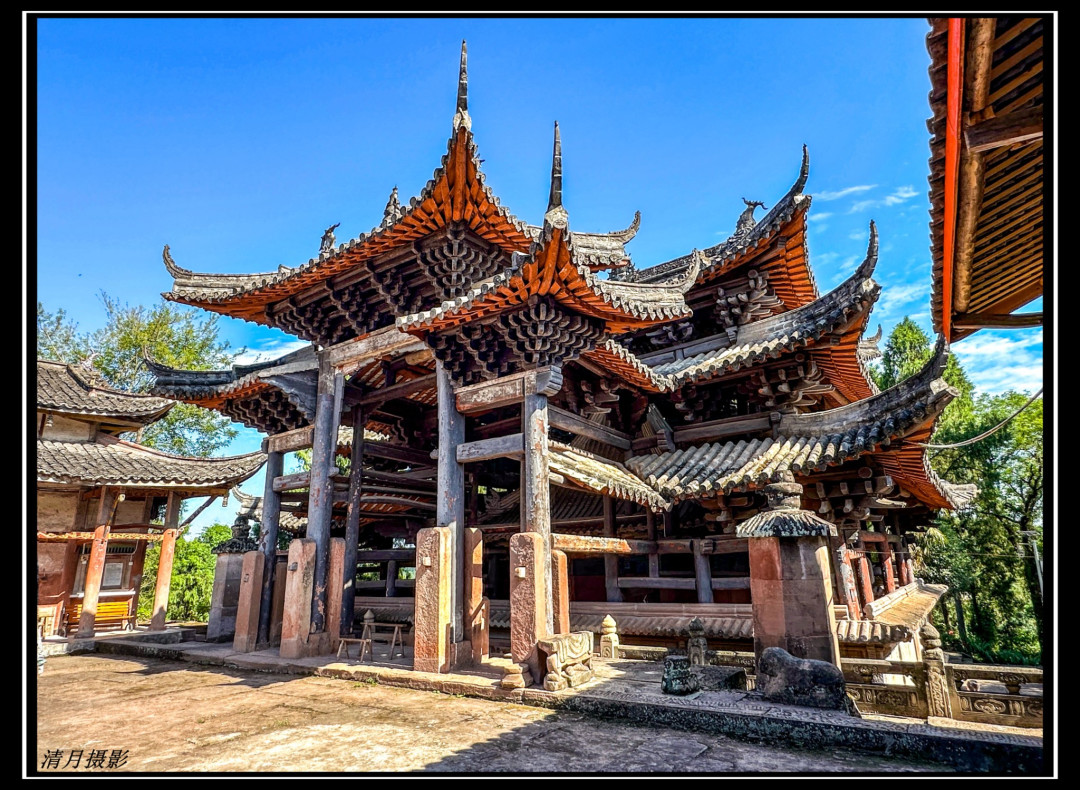
Meta Description: Discover the hidden gem of Anyue Stone Carvings in Sichuan—over 100,000 ancient Buddhist statues, 370 grottoes, and 9 national treasures. A journey through time awaits.
Introduction: The Hidden Pearl of Sichuan's Buddhist Heritage
In the southeastern part of the Sichuan Basin lies a county whose name might sound unfamiliar to many: Anyue. If not for that internet-famous lemon, I might never have given this place a second glance on the map. But when I flipped through a set of statistics, I was instantly stunned: this is the most concentrated site of ancient Chinese Buddhist statue remains in the entire country—over 370 grottoes, more than 100,000 statues, and nine national key cultural relic protection units. Anyue, it turns out, is a pearl buried by the dust of time.
In June 2024, I embarked on a spontaneous journey. I transferred from Chengdu to Anyue and, guided by Mr. Zhou Chun, an expert from the Stone Carving Research Institute, spent two days traveling through a thousand years, deeply encountering these stone carvings scattered among the hills. They have stood silently for millennia, as if waiting for someone with a discerning eye to arrive.
[Link: Chengdu travel guide]
Yuanjue Cave: Flying Apsaras Dance, A Unique Interpretation of the Western Triad
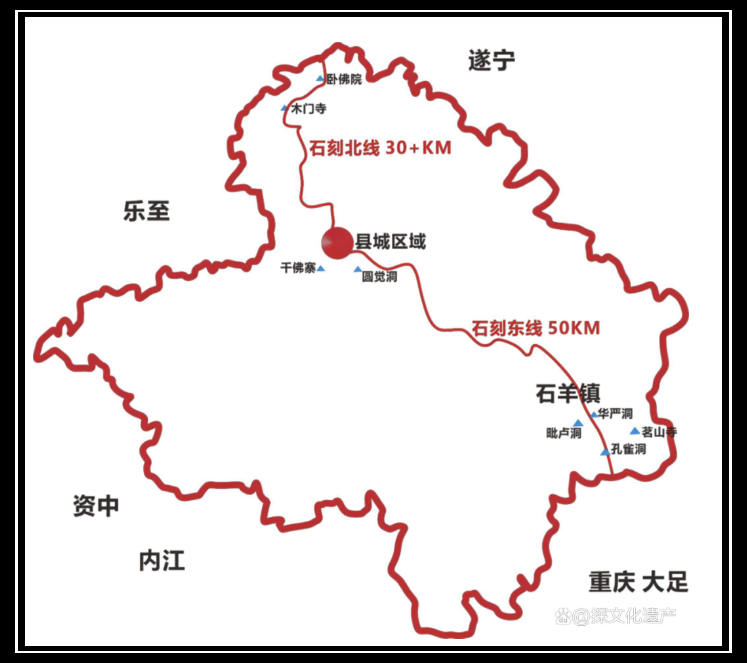
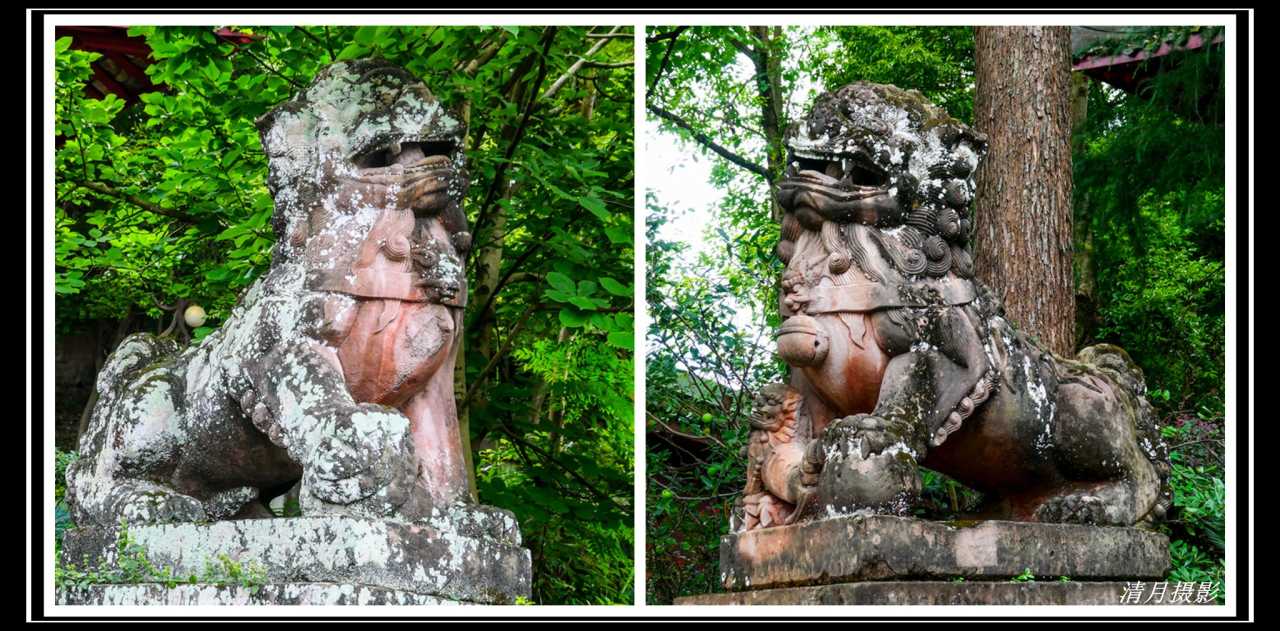
Yuanjue Cave is located on Mount Yunjü in the southeastern corner of Anyue County. It is part of the sixth batch of national key cultural relic protection units and has now been upgraded to a 4A-level scenic spot. As you enter the mountain gate, the first thing that catches your eye is a pair of stone lions—though they are modern works, Mr. Zhou jokingly said they were carved "just last week." Their smooth lines and full forms are enough to show the exquisite craftsmanship passed down through generations of Anyue artisans.
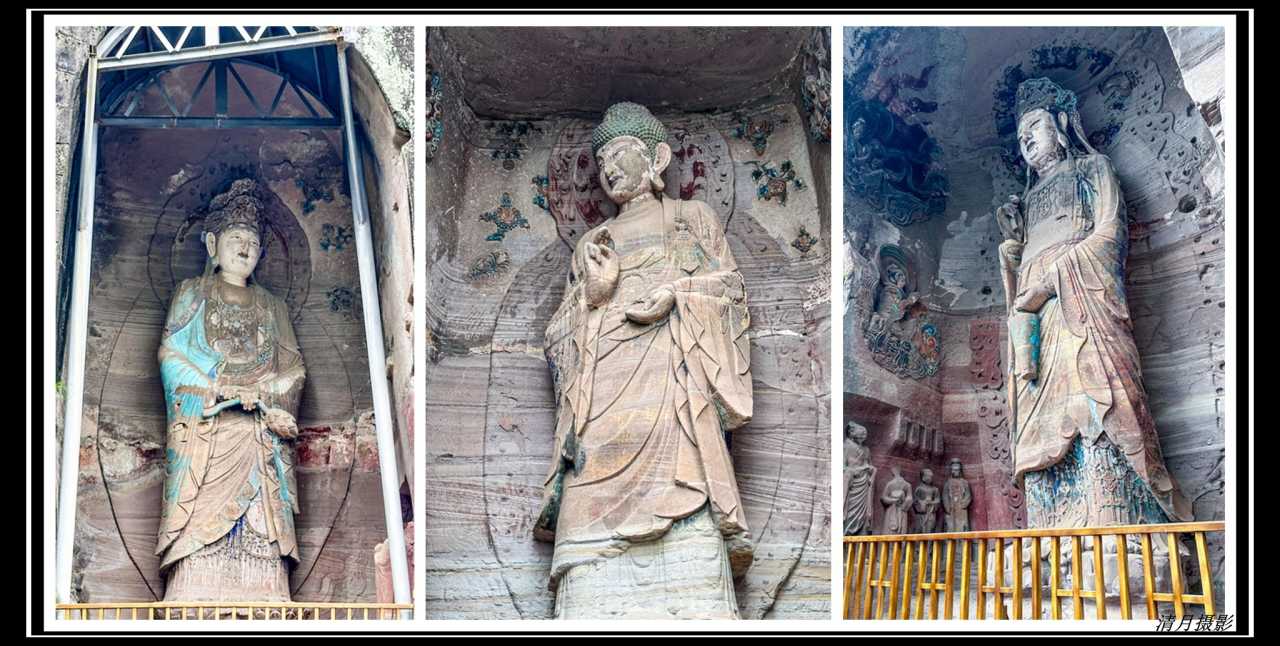
The stone carvings here are concentrated on the southern and northern cliffs of the western mountain, stretching 186 meters along the cliff face. They contain 103 niches and caves, housing 1,933 statues of various sizes. The most striking are three large statues from the Northern Song Dynasty on the northern cliff, standing seven meters tall—truly masterpieces among China's grotto treasures.
What Makes Yuanjue Cave Unique?
Typically, the "Western Triad"—Amitabha Buddha, Mahasthamaprapta Bodhisattva, and Guanyin Bodhisattva—are carved together in a single niche, standing side by side. But Yuanjue Cave carves them into separate niches, a unique feature of Anyue's grottoes. The decorative carvings within each niche are also worth savoring, especially the stone flying apsaras on the left and right walls. Their ribbons flutter in the wind, creating an atmosphere of "lightness and grace, celestial garments flying, and the entire wall stirred by the breeze."
The Guanyin with a Pure Vase: A Millennium-Old Technique of Holding the Vase Between Fingers
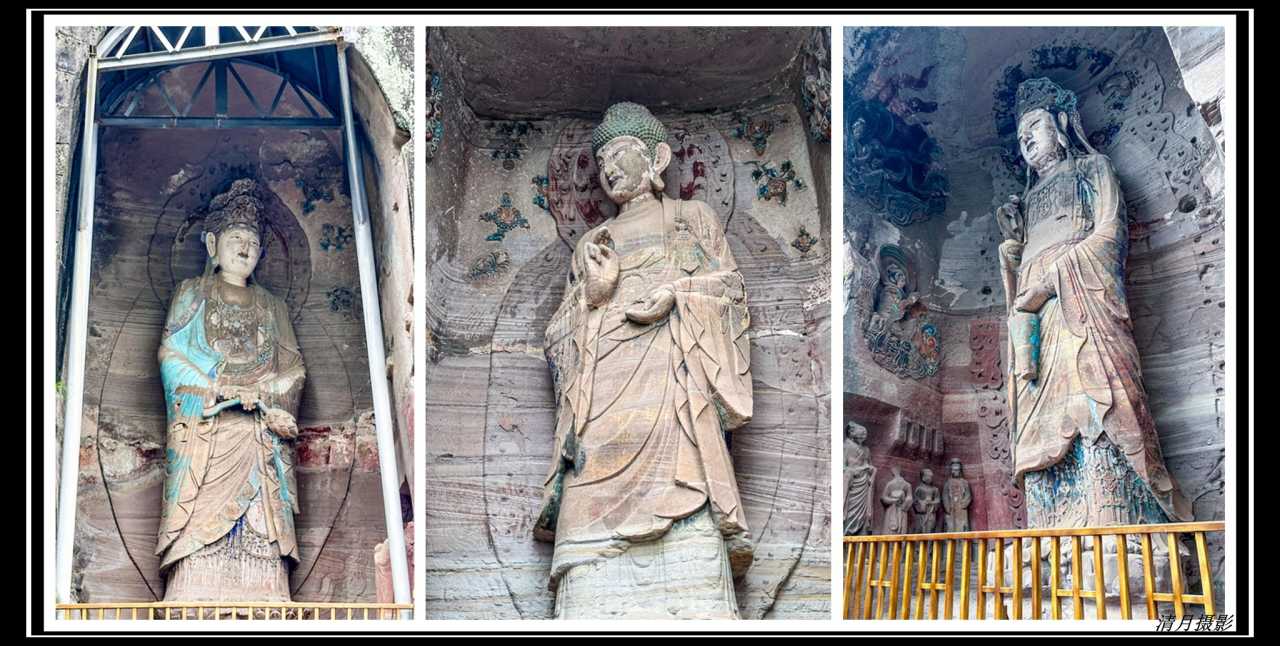
The Guanyin with a Pure Vase is one of Yuanjue Cave's most treasured statues. The bodhisattva has a round face, a kind expression, slightly upturned eyes that are half-open and half-downcast, a high nose bridge, and full lips with distinct Shu-region features. The hollowed-out crown on her head is intricately carved with ornate patterns; she wears a jeweled necklace, holds a pure vase between two fingers of her left hand, and pinches a willow branch in her right. This detail is astonishing: a thousand years ago, the artisan captured even the precise tension in her fingertips.
The flying apsaras at the top of the niche's left and right walls are the finishing touches. The left apsara has a delicate face, like a young woman of sixteen, with ribbons wrapped around her neck, intricate patterns carved on her abdomen, and a mandala flower in her hands. The right apsara has a solemn expression, turned sideways, holding a lotus bud vessel, with her robes fluttering in the wind. Inside the niche, there are also donor figures, small in proportion but equally exquisite, reflecting the artisan's devotion to the Buddha.
The Reclining Shakyamuni: An Approachable Buddha Locking Eyes with His Disciple

Standing 6.2 meters tall, the reclining Shakyamuni statue is the largest standing side-profile Buddha in China. The Buddha has dense spiral curls on his head, his face turned to the right, wearing a gentle smile, with his eyes looking downward, directly meeting the gaze of his disciple Kasyapa at the lower right. This warm and friendly expression is vastly different from the solemn and dignified Buddha statues found elsewhere.
His right hand forms the teaching mudra, representing the act of preaching the Dharma, while his left hand forms the wish-granting mudra, symbolizing the fulfillment of all beings' wishes. An oval flame-shaped halo extends all the way to the top of the cave. Among the flying apsara patterns on both sides, the left group shows bare-chested apsara maidens holding flowers, with colorful ribbons drifting as they soar above seven-colored auspicious clouds.
The Lotus-Hand Guanyin: The Miracle of a Thousand-Pound Lotus Enduring for a Millennium
This Northern Song Dynasty Guanyin statue stands 5.7 meters tall. She wears a hollowed-out crown featuring a seated Buddha, with a beautiful face and a solemn, dignified demeanor. What is most astonishing is the enormous lotus flower she holds in her hand—weighing over a thousand jin (about 500 kilograms) —which has remained intact for a thousand years. Upon closer inspection, you realize that the lotus has three points of contact, forming a triangular support. This perfect fusion of mechanical design and aesthetics showcases the exceptional skill of Anyue's stone carvers.
The Twelve Perfect Ones: Ethereal Radiance Amidst Light and Shadow
Yuanjue Cave is 10 meters deep, 4.5 meters high, and 4.4 meters wide. On the main wall, the Trikaya Buddhas sit atop a platform, while on the side platforms sit twelve bodhisattvas, including Manjushri and Samantabhadra, collectively known as the "Twelve Perfect Ones." In Buddhist terms, "perfect enlightenment" means "awakening to you, to me, to others, and to the complete fulfillment of the path," implying that everyone has the potential to awaken and become a Buddha.
The bodhisattvas inside the cave wear delicate, intricately crafted floral crowns, draped with fine pearl necklaces. Their robes are soft and flowing, as if made of silk. In the hazy light, it feels as though an ethereal aura is rising, creating a deeply atmospheric scene. Unfortunately, the heads of the statues were damaged before the liberation, and the current heads were recarved in the 1980s.
The Southern Cliff Carvings: The "Down-to-Earth" Art of the Five Dynasties
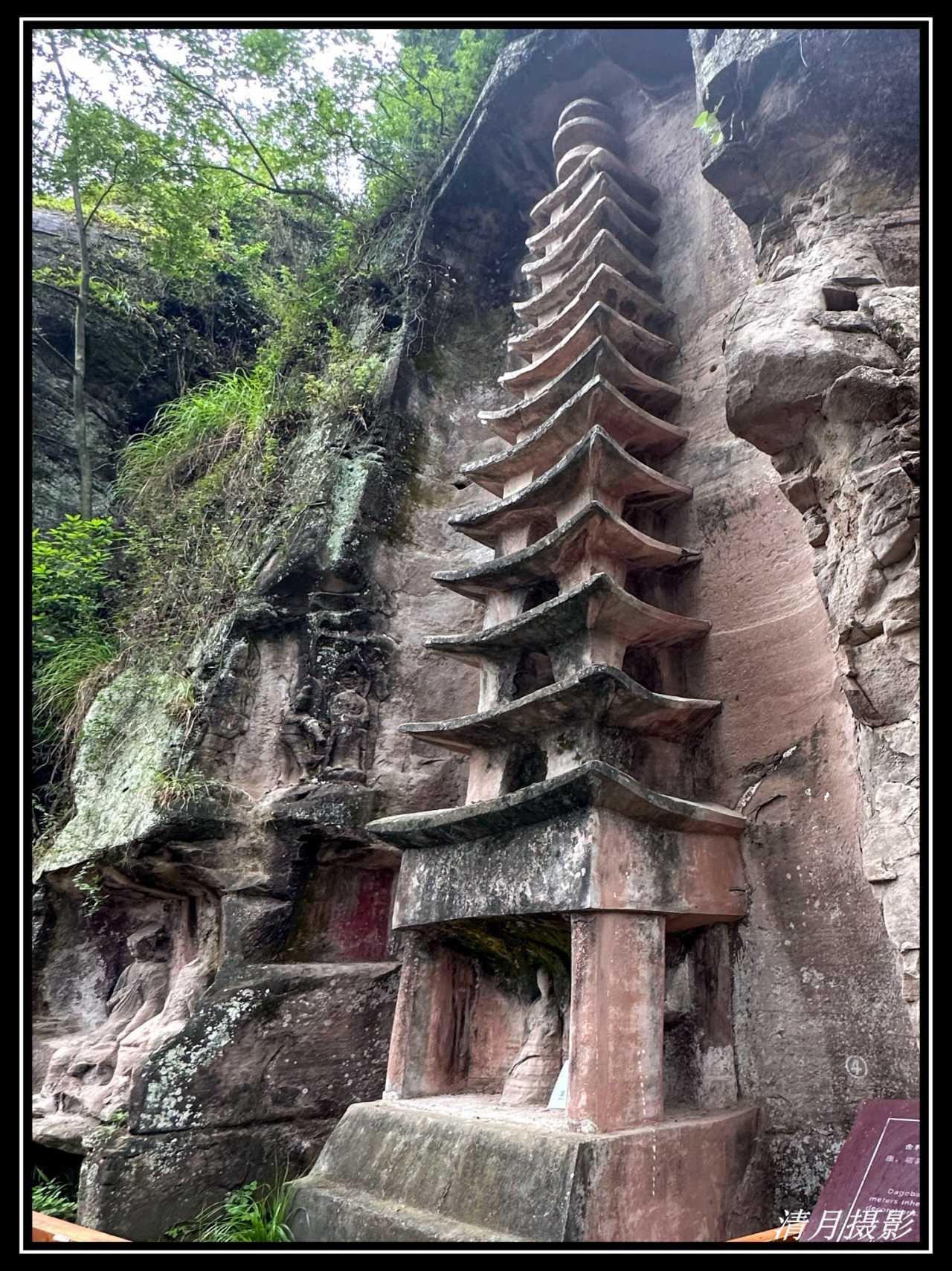
The Five Dynasties carvings on the southern cliff feature as many as 27 different themes, introducing new subjects such as the "Sixteen Arhats," "Vaisravana Heavenly King," and "Hell Transformation Tableau" for the first time. These statues are small and delicate, with relaxed expressions and simple, flowing robes that resemble thin silk. They combine the richness and elegance of the Tang Dynasty with the refined beauty of the Song Dynasty.
What I loved most were the lifelike statues full of everyday charm: one with a hand gesture like crossing its legs, a "greasy middle-aged uncle" with a big belly carrying a long sword, and a statue whose robes look like a modern bathrobe. These down-to-earth carvings brought an involuntary smile to my face.
[Link: Dazu Rock Carvings comparison]
Lingyou Temple: A Five Dynasties Treasure Hidden in a Mountain Village
The Lingyou Temple cliff carvings are not open to the public. There is little information online, and navigation apps can't find them. We wound our way along a narrow mountain road barely wide enough for one car, until we reached a village with only a few households. Who would have thought that the grotto hidden inside this small red mountain house would contain statues that have survived since the Five Dynasties period?
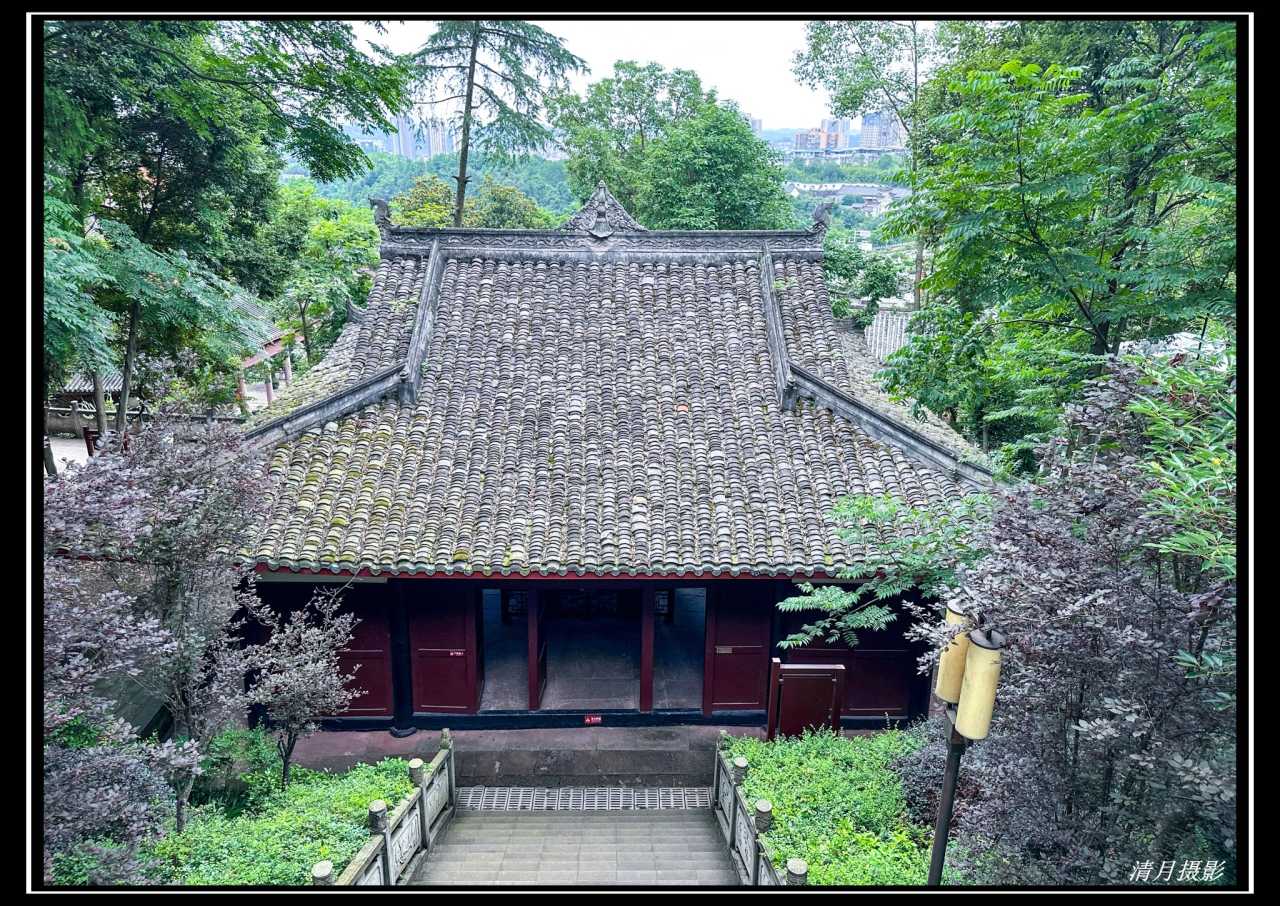
When the caretaker, an elderly man, answered the phone to let us in, the first thing we saw was his bed. He said something that moved me deeply: "I am here, so the artifacts are here. I guard them with my life." Keep in mind that the government provides minimal funding for protection—these treasures survive thanks to the dedication of local villagers.
The statues inside are remarkably well-preserved, with vivid expressions and intricate details that rival any major grotto site in China. The cliff carvings here feature a mix of Buddhist and Taoist themes, reflecting the religious syncretism of the Five Dynasties period.
[Link: Sichuan off-the-beaten-path destinations]
FAQ: Everything You Need to Know About Anyue Stone Carvings
1. How do I get to Anyue Stone Carvings from Chengdu?
You can take a high-speed train from Chengdu East Station to Anyue Station (approximately 1 hour). From Anyue city center, hire a local driver or take a bus to Yuanjue Cave (about 30 minutes). For Lingyou Temple, you'll need a private car and a guide, as it's not on public transport routes.
2. What is the best time to visit Anyue Stone Carvings?
The best time is spring (March-May) and autumn (September-November) when the weather is mild and the light is soft for photography. Summer can be hot and humid, while winter is cold but offers fewer crowds.
3. Are the Anyue Stone Carvings accessible for elderly or disabled visitors?

Yuanjue Cave is a 4A-level scenic spot with paved paths and some accessibility features. However, Lingyou Temple and other scattered sites are on uneven mountain terrain and may be challenging for those with mobility issues.
4. How much time should I allocate for visiting Anyue Stone Carvings?
At minimum, two full days are recommended: one day for Yuanjue Cave and its main sites, and another day for Lingyou Temple and other remote carvings. If you're a serious history or art enthusiast, consider 3-4 days to explore all nine national protection units.
5. Are there any entrance fees for Anyue Stone Carvings?
Yuanjue Cave charges a modest entrance fee (around 50 RMB). Lingyou Temple is not officially open to the public, so you'll need to arrange a visit through a local guide or the Stone Carving Research Institute. Some smaller sites are free but require a guide to locate.
Conclusion: A Journey Through Time Awaits
Anyue Stone Carvings are not just a collection of ancient statues—they are a living testament to the artistic and spiritual achievements of Chinese civilization. Unlike the crowded and commercialized grottoes of Dazu or Longmen, Anyue offers an intimate, raw encounter with history. The carvings are scattered across the countryside, waiting for those willing to venture off the beaten path.
If you're a history buff, an art lover, or simply a traveler seeking authentic experiences, Anyue will reward you with moments of profound beauty and quiet reflection. The flying apsaras still dance, the Guanyin still holds her lotus, and the Buddha still smiles—unchanged for a thousand years.
Ready to embark on your own encounter with time? Start planning your trip to Anyue today. Contact the Anyue Stone Carving Research Institute for guided tours, or join a small-group expedition from Chengdu. The millennium-old secret is waiting to be discovered.
[Link: Book a guided tour to Anyue]
Note: This article is based on a personal journey in June 2024. For the most up-to-date information on opening hours, entrance fees, and accessibility, please check official sources or contact local tourism authorities.