A Nine-Day Summer Journey Through Chengdu: Dujiangyan, Leshan, Sanxingdui, and Jiuzhaigou – A Trip You'll Never Want to Leave
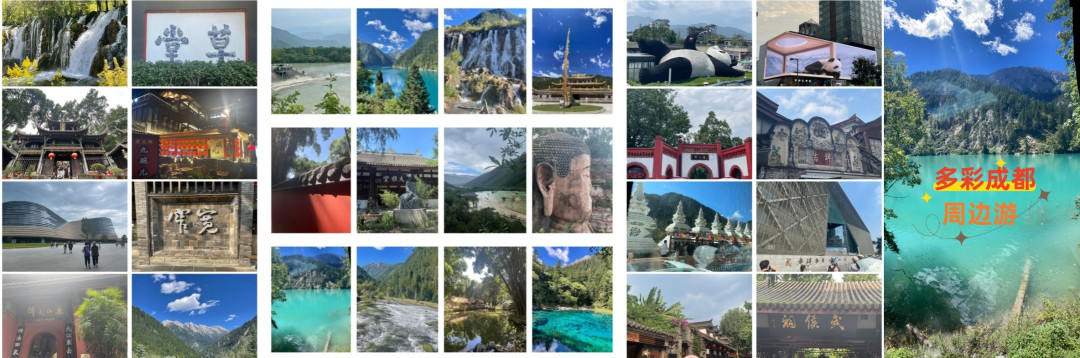
Meta Description: Plan your ultimate Chengdu summer itinerary with this 9-day guide covering Jiuzhaigou, Leshan Giant Buddha, Sanxingdui Museum, Dujiangyan, and Chengdu Citywalk. Expert tips on food, tickets, and avoiding crowds.
Introduction: Why Chengdu Should Be Your Summer 2024 Destination
As a Sagittarius woman, my soul is always on the road, craving every new adventure. For the summer of 2024, I was torn between Gannan, Western Sichuan, Guizhou, and Yunnan, but ultimately settled on Chengdu – a city I had only passed through briefly but could never forget.
With ample time this summer, I decided to go deep and explore the best of Chengdu's surroundings: the ethereal beauty of Jiuzhaigou, the food and historical wonders of Leshan, the endlessly surprising Sanxingdui Museum, the millennia-old Dujiangyan irrigation system, plus a Citywalk through downtown Chengdu. Before setting off, I worried that nationwide rainfall might disrupt the itinerary, so I kept delaying until mid-August before finally committing.
For this nine-day trip, I spent a week planning – booking tickets, trains, flights, accommodations, researching every attraction's details, and even writing a six-page itinerary report to share with my mom friend who was joining me. As it turned out, advance planning not only made the journey smoother but also helped us stay calm when unexpected situations arose.
My design principles were simple: no military-style checkpoint tours, stay mostly within Chengdu city to avoid luggage hassles, make smart use of public transport and ride-hailing, sample as much local food as possible, and push my spice tolerance just a little.
Day 1: Landing in Chengdu – Kicking Off the Eat-and-Wander Mode
From Dalian to Chengdu: The Courage to Head South

We booked the earliest flight to Chengdu, prioritizing Shuangliu Airport – after all, Tianfu Airport is so far from the city that an online joke goes, "Why doesn't Tianfu Airport just build its terminal in Chongqing?" Exaggerated, yes, but it captures the distance. Four people, four suitcases – we arranged a pickup service for ease and peace of mind.
Flying from Dalian's 30°C (86°F) summer to Chengdu's forecasted 36°C (97°F), the kids with us showed real courage. That's the reality of summer travel – no matter how hot, the wanderlust wins.
Yulin Road Food Street: The First Skewer Test
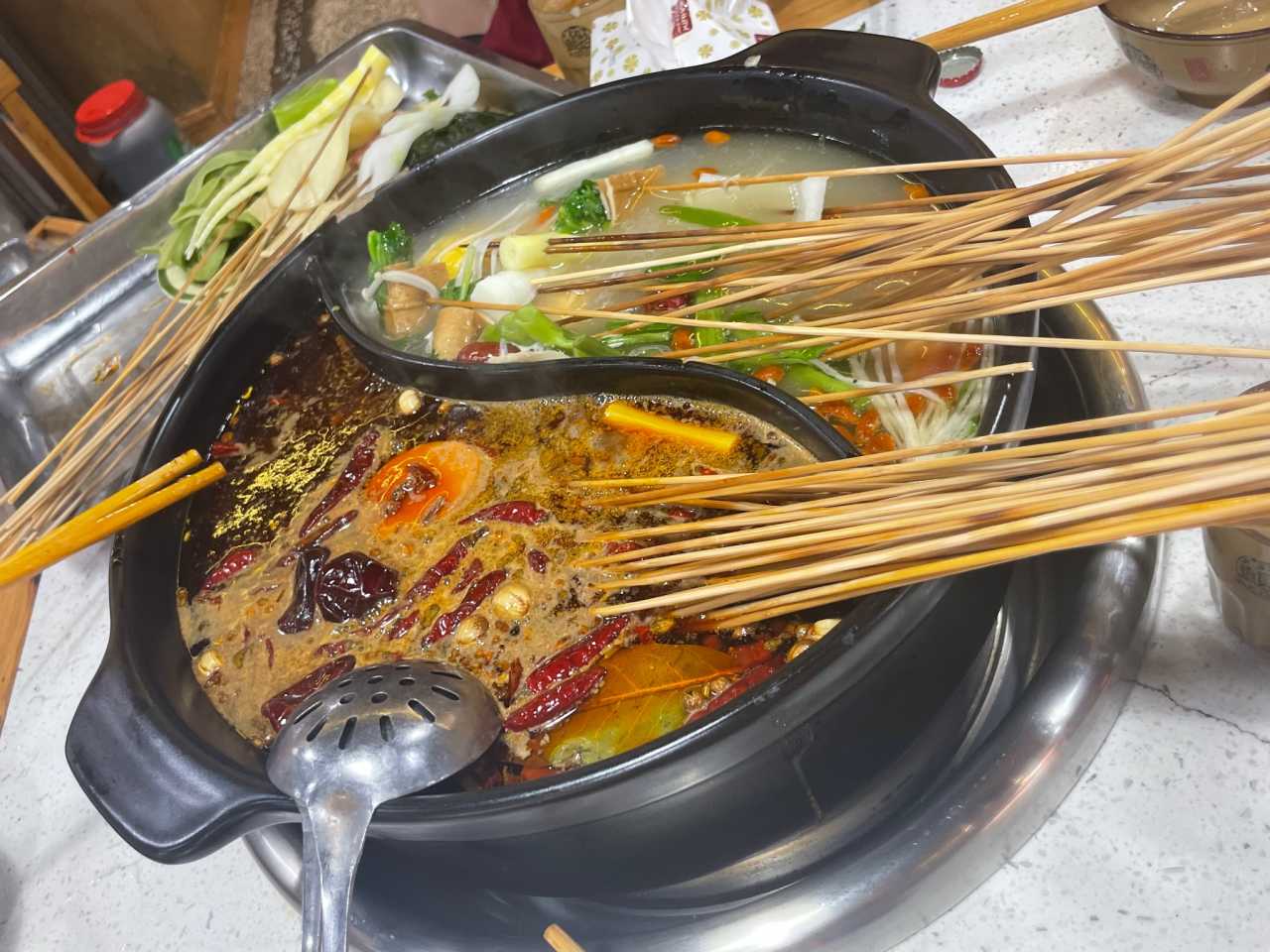
We arrived at the hotel around 11 a.m., dropped our bags, and headed straight to Yulin Road Food Street. We found a mid-sized 串串 (skewer hotpot) restaurant. The owner proactively asked if we wanted a dual-broth pot and how spicy we'd like it. For us northerners, mild was already a solid workout.
With the heat and spice, cold drinks and 冰粉 (ice jelly) became our best allies. Across the street, a vendor sold 冰粉 from a cart, and an elderly local woman bought a bowl with all the toppings – clearly a daily ritual. Our first meal didn't disappoint; we got a gentle introduction to spice levels. The sesame oil dipping sauce was a lifesaver for cooling down. Duck blood and duck intestines were fresh and flavorful, even better after a quick boil in the spicy broth. Leafy greens were limited – one I couldn't name (looked like spinach), plus napa cabbage, baby bok choy, asparagus, potatoes, and bamboo shoots. A special mention goes to 干贡菜 (dried tribute greens) – a small handful expanded into a generous portion after cooking.
Pro tip: If you're new to Sichuan spice, start with a mild dual-broth pot and always keep 冰粉 or cold milk nearby.
Du Fu Thatched Cottage: Stepping into the Poet's World
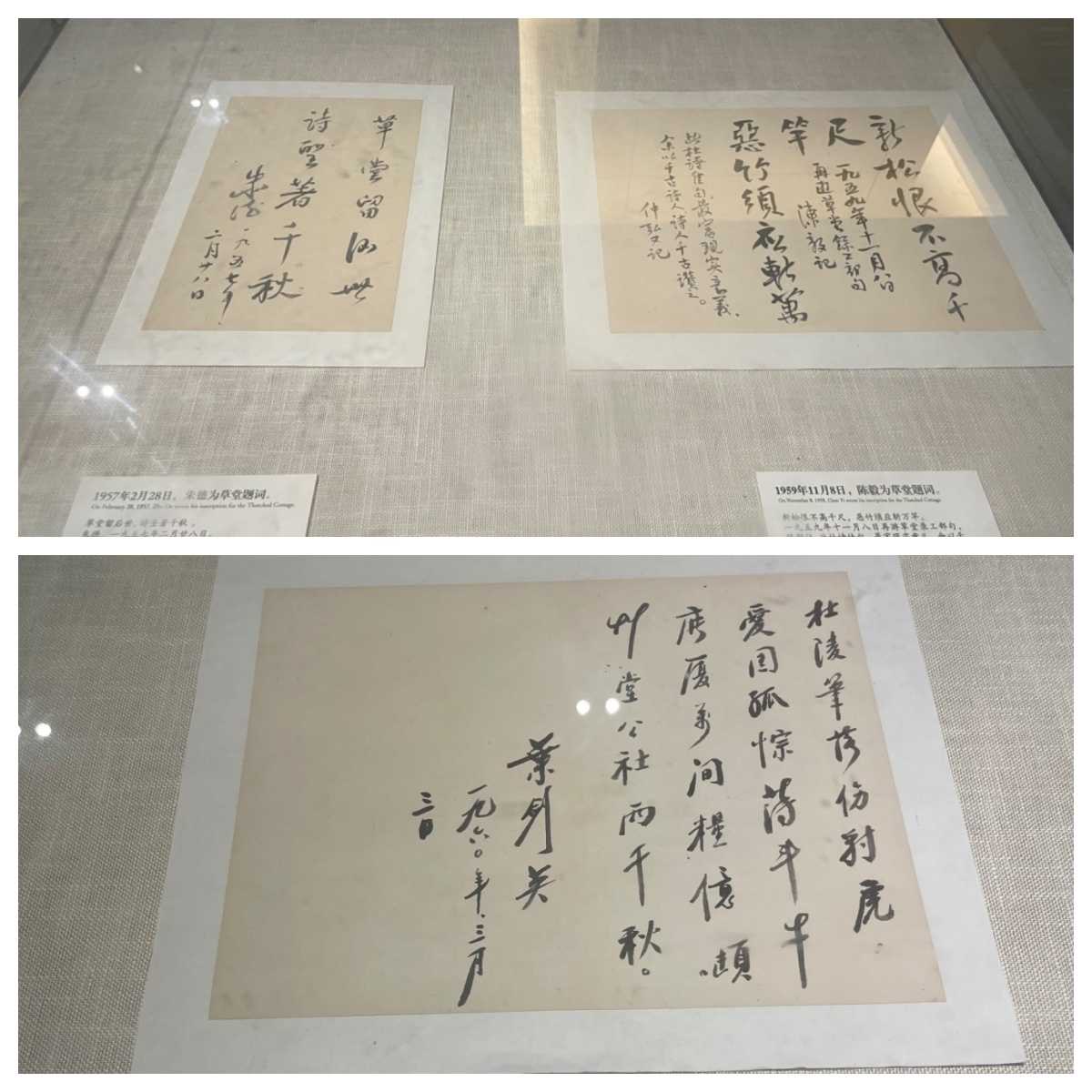
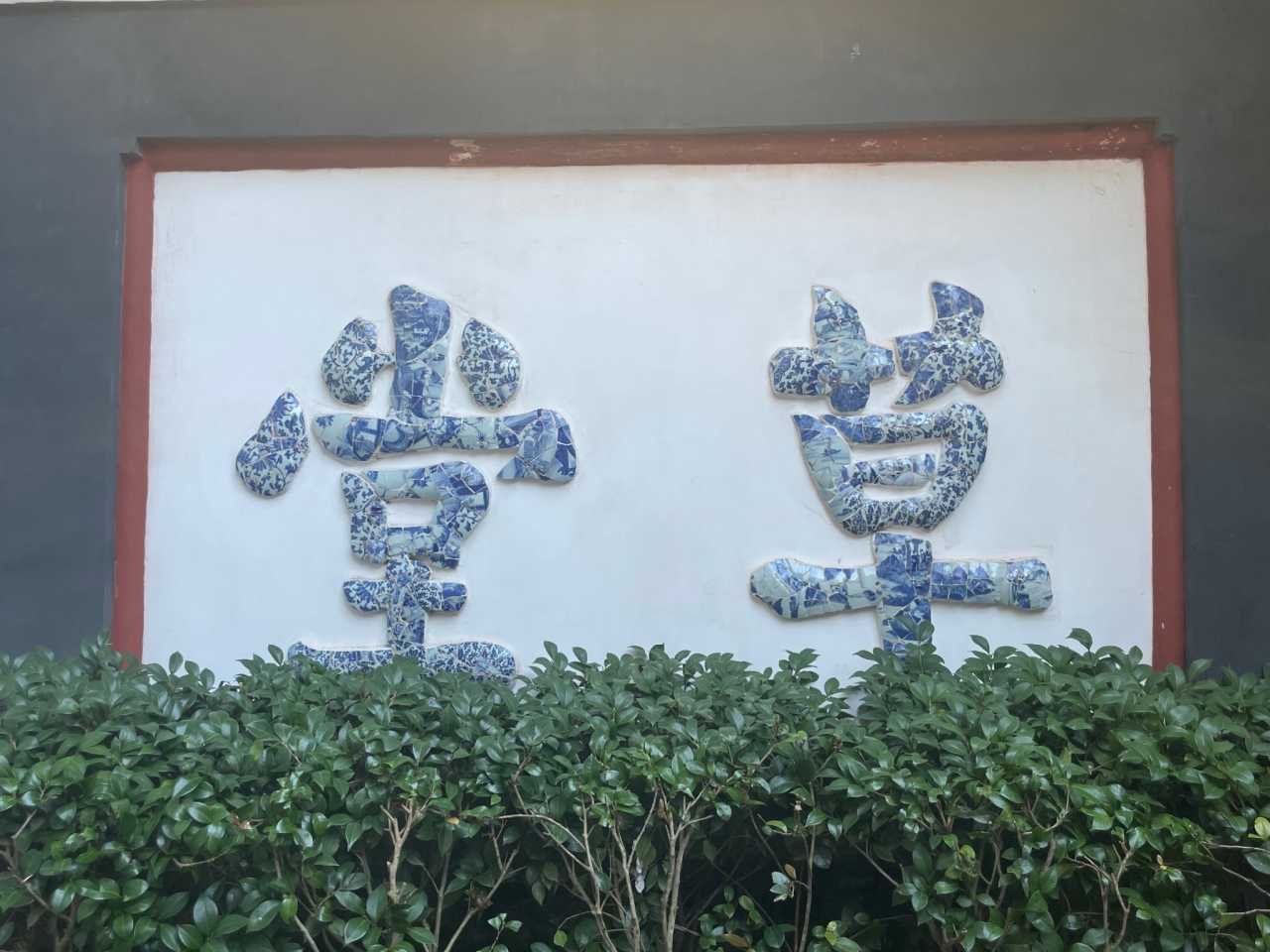
Du Fu Thatched Cottage was the former residence of the great Tang Dynasty poet Du Fu during his exile in Chengdu. In the winter of 759 AD, fleeing the An Lushan Rebellion, Du Fu brought his family from Longyou to Sichuan and lived here for nearly four years, writing over 240 poems. Tang poet Wei Zhuang later found the site and rebuilt the cottage, with renovations and expansions continuing through the Song, Yuan, Ming, and Qing dynasties.
Today, the cottage covers nearly 300 mu (about 50 acres), preserving the architectural layout from the Ming Hongzhi era (1497) and the Qing Jiaqing era (1816). Tickets cost 50 RMB, half price for students under 18. Book through the WeChat public account "Du Fu Thatched Cottage."
At the entrance, student-like guides offered their services, starting at 40 RMB per person and bargaining down to 30 RMB. We bought two spots. Inside, we found our guide, received headsets, and waited for other visitors to form a group. The 90-minute tour was incredibly detailed. Our impromptu group included elementary, middle, and high school students with their parents – all taking advantage of the break to learn.
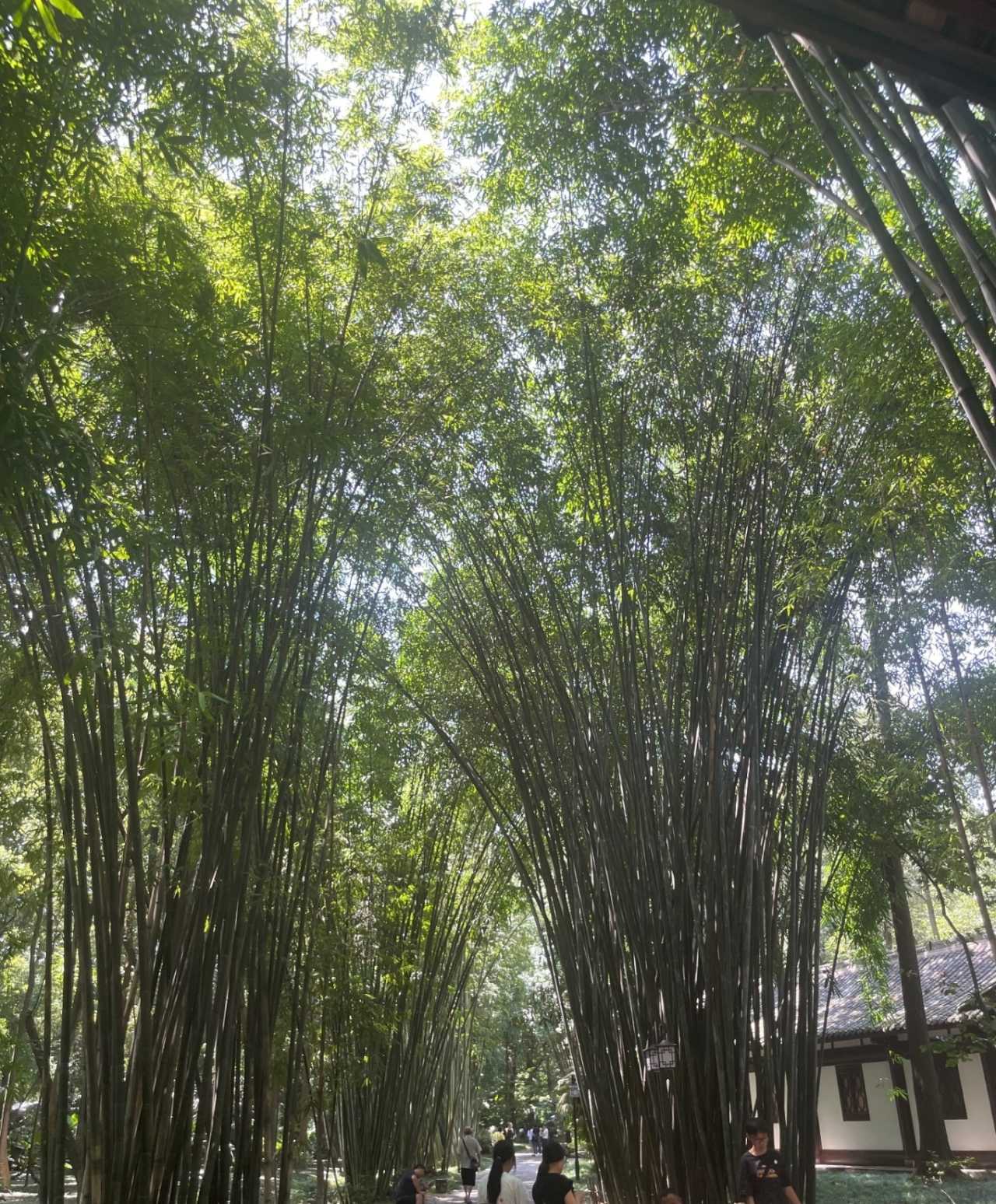
The cottage grounds are dense with bamboo, whose arching branches create natural umbrellas along the paths. On a scorching 35–36°C (95–97°F) Chengdu day, this shade was refreshing, echoing Du Fu's spirit of embracing the world and caring for the people.
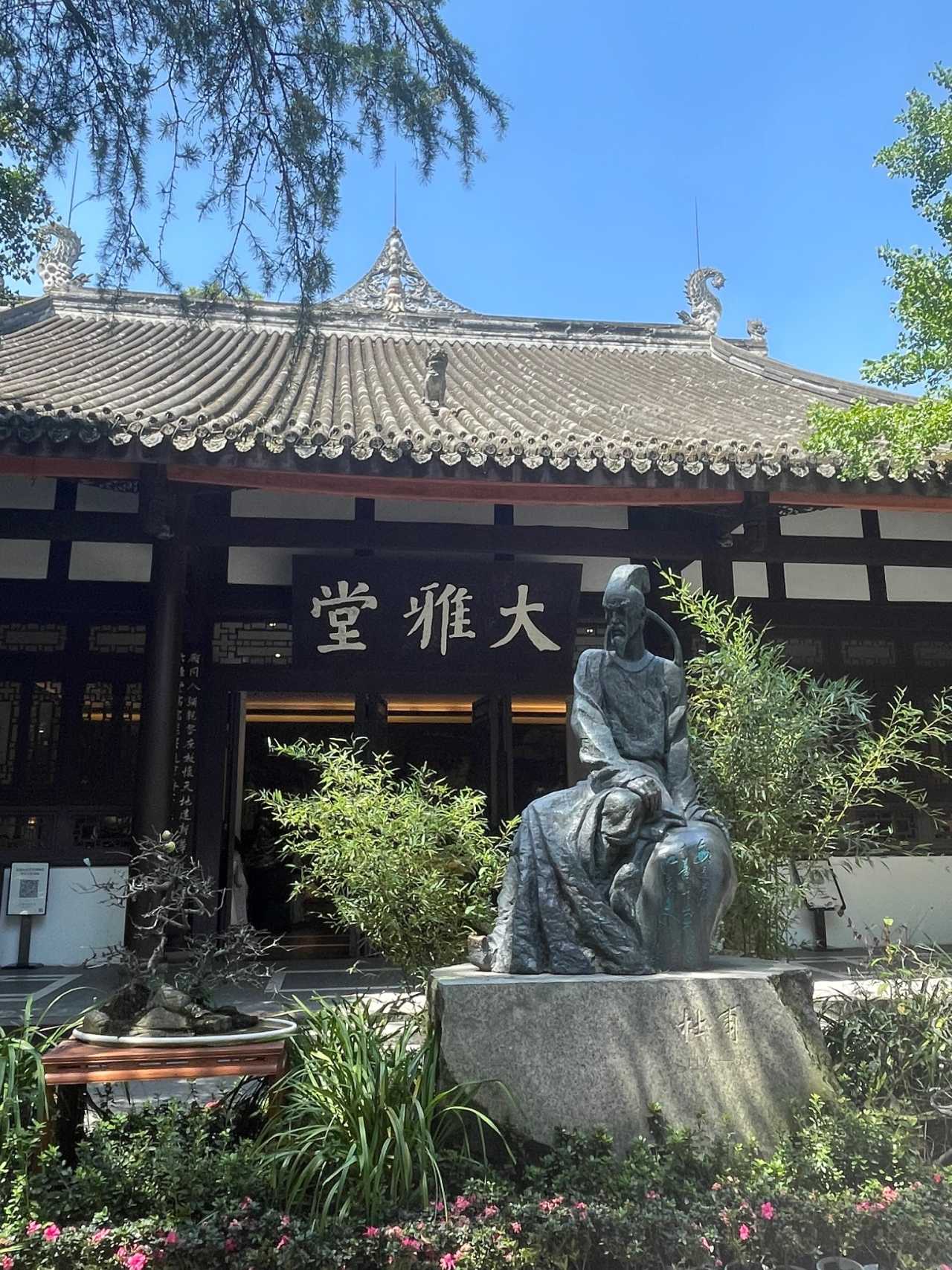
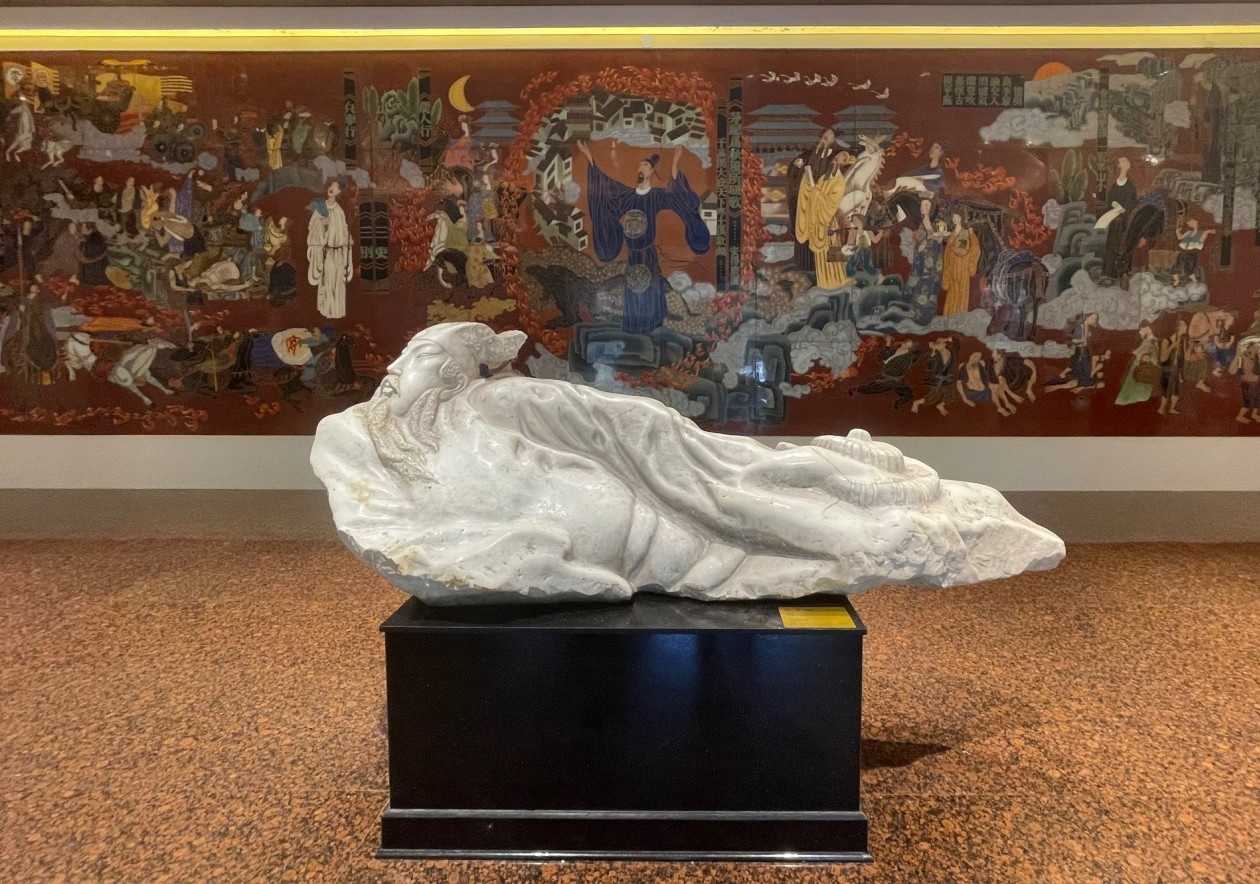
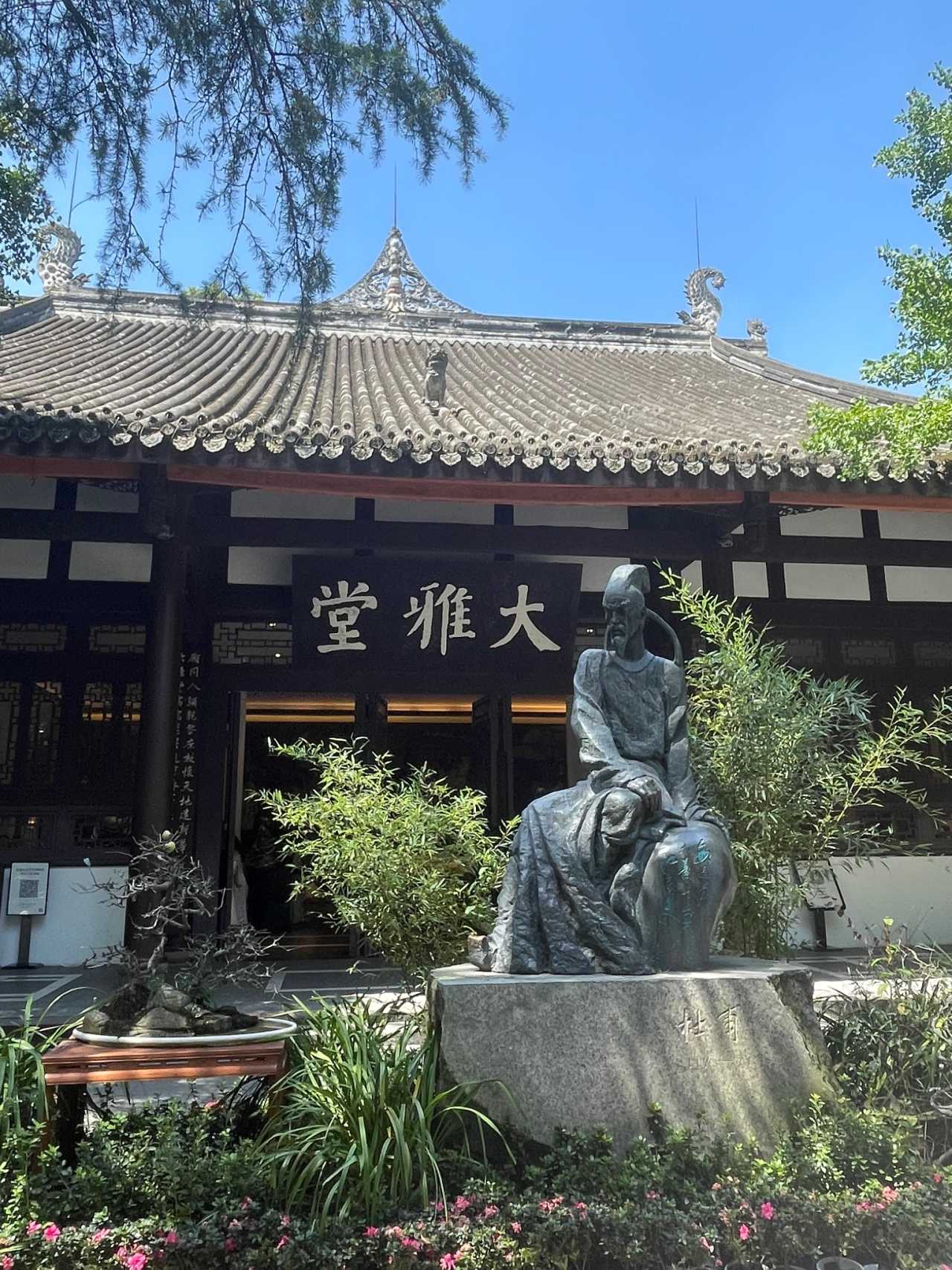
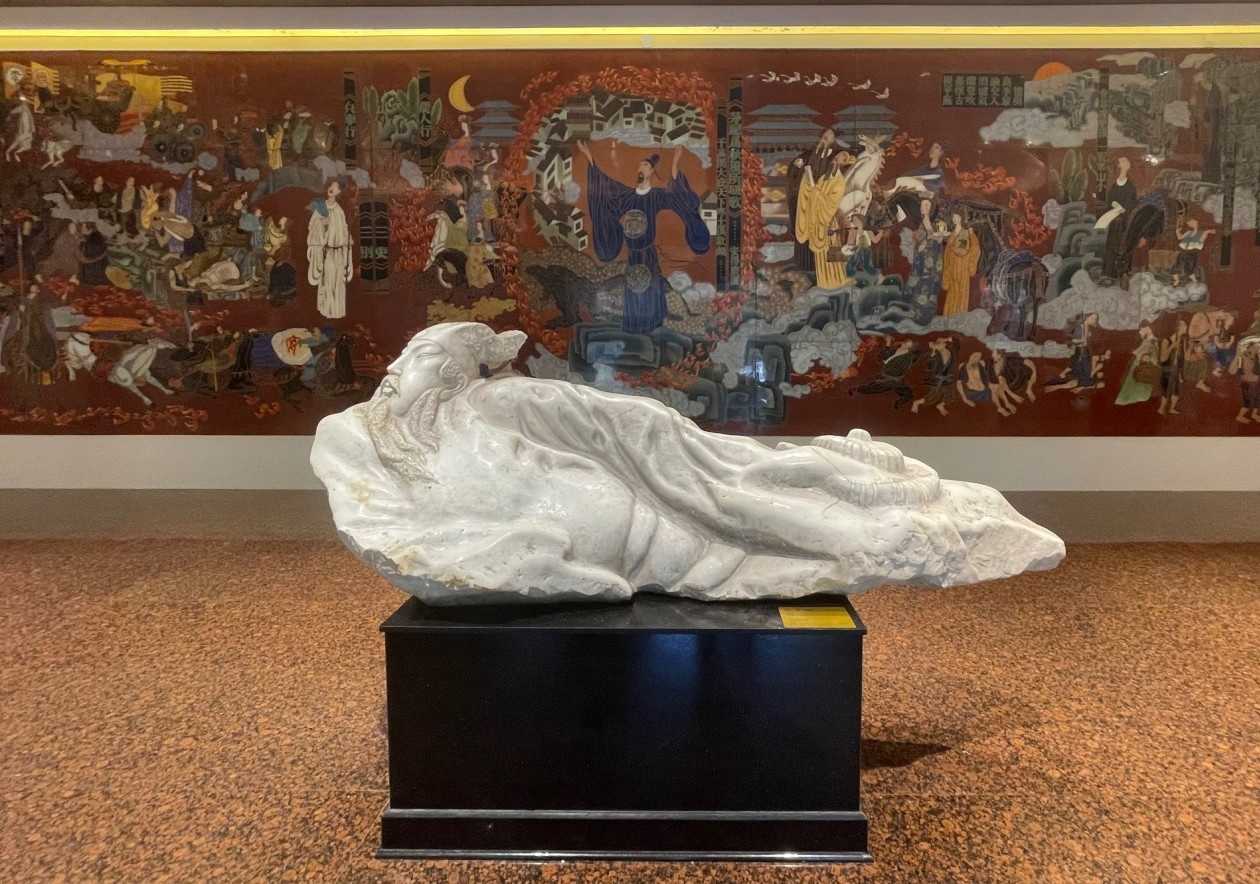
The Grand Elegance Hall houses statues of poets from Qu Yuan through the Tang and Song dynasties. Our guide lingered here the longest, recounting Du Fu's life, his reasons for entering Sichuan, his struggles, and explaining masterpieces like "My Thatched Roof Is Ruined by the Autumn Wind" and the "Three Officials and Three Partings" series. The reconstructed cottage, set against beautiful scenery, feels perfect for self-cultivation. With a guide, you don't just skim the surface – a small garden can bring you closer to a realist poet's inner world.
The cottage's famous red wall with bamboo shadows is photogenic even as an empty frame. In the breeze, bamboo shadows dance; under the clear sky, the red wall stands silent. A certain great leader once left his silhouette here, and many visitors mimicked the pose. I struggled just to get an empty shot.
Wenshu Monastery, Kuixinglou, and Liyuan Guild Hall: The Start of Nightlife
We walked from Du Fu Thatched Cottage to Wenshu Monastery, arriving just after 5 p.m. – already closed. Also known as "Konglin Hall," it was built during the Sui Dynasty (605–618 AD) and is Chengdu's best-preserved Buddhist temple. Free entry, closes at 5 p.m. The green-tiled walls and red gates bear the inscription "World Peace, Human Happiness." Missing it was a small regret.
We pivoted to Kuixinglou Food Street. As it turned out, this was the only food-related misstep of the entire Chengdu trip – not that it was bad, but it didn't suit our northern palates. Every street-side shop had lines, and many locals were eating there. We tried 兔头 (rabbit heads) – five-spice flavor, coated in crushed peanuts. If you enjoy chicken heads or duck heads (lots of bones, little meat), you might like rabbit heads; otherwise, not so much. A tiny rabbit head with teeth, eyes, and tongue is quite a challenge. In summary: Kuixinglou's food scene is more rustic, closer to local tastes – unbearable for non-spice-eaters.
After dinner, we went to the Liyuan Guild Hall (Wenshu Monastery branch) for a Sichuan opera face-changing performance. Chengdu has many venues for this intangible cultural heritage. Choosing based on affordability and a light introduction, I picked this one. The show lasted about 50 minutes, featuring face-changing, rod puppetry, water sleeves, shadow puppetry, Sichuan opera arias, fire-spitting, and kung fu tea ceremony. The acts were varied and concise – captivating for first-timers without being tedious.
I'd previously seen a performance at Shu Feng Ya Yun, which had a larger venue, longer acts, dialect performances requiring subtitles, and pricier tickets (150 RMB+ for good seats, needing advance booking). For families, Liyuan Guild Hall offers great value at 63 RMB per person. The face-changing performer eventually came into the aisle for close-up acts. You can also buy a cup of tea, and during the tea ceremony, performers pour tea right at your seat. Arrive early to grab seats near the aisle.
Day 2: Panda Valley Encounters and Dujiangyan's Ancient Wisdom
Panda Valley: Up Close with the National Treasures
How can you visit Chengdu without seeing giant pandas? If you're not set on seeing the celebrity panda "Hua Hua," skip the crowded Chengdu Research Base of Giant Panda Breeding and head to Panda Valley instead. Located about 50 km from downtown Chengdu, Panda Valley offers a more natural, less crowded environment.
Ticket prices: 55 RMB for adults, free for children under 6 or under 1.3 meters. Book in advance through the official WeChat account "Panda Valley." The park opens at 8 a.m., and arriving early (before 9 a.m.) is crucial – pandas are most active in the cooler morning hours. By 10 a.m., most pandas are already napping.
We saw pandas munching bamboo, climbing trees, and even play-fighting. The viewing platforms are well-designed, and the staff are helpful. If you're lucky, you might spot red pandas (lesser pandas) too. Allow 2–3 hours for a thorough visit.
Transport tip: Take Metro Line 3 to Chengdu Medical College Station, then transfer to a direct bus or take a 30-minute taxi ride (about 40 RMB).
Dujiangyan: The 2,000-Year-Old Irrigation Marvel
After Panda Valley, we headed to Dujiangyan, a UNESCO World Heritage site and one of the oldest irrigation systems still in use today. Built in 256 BC by Li Bing and his son, it tamed the Min River without a dam – a feat of ancient engineering that still irrigates over 5,000 square kilometers of farmland.
Ticket price: 80 RMB (half price for students). Book via the "Dujiangyan Scenic Area" WeChat account.
The site is divided into three main parts: the Fish Mouth Levee (which splits the river), the Flying Sand Weir (which controls sediment), and the Bottle-Neck Channel (which directs water to the irrigation system). Walking across the Anlan Suspension Bridge (also known as the "Couple's Bridge") offers stunning views of the river and the surrounding mountains.
Pro tip: Hire a guide (around 100 RMB) or rent an audio guide (20 RMB) to fully appreciate the engineering genius. Without context, the site can seem like just a pretty park. With context, it's mind-blowing.
After touring, we had lunch at a local restaurant near the south gate. Try the Dujiangyan-style fish – fresh river fish cooked with pickled vegetables and chilies. It's a local specialty you won't find in Chengdu city.
Day 3: Sanxingdui Museum – Unlocking the Mysteries of Ancient Shu
Sanxingdui Museum: The Bronze Age Marvel
Sanxingdui Museum is a must-visit for anyone fascinated by ancient civilizations. Located in Guanghan (about 30 km from Chengdu), this museum houses artifacts from the Bronze Age Shu Kingdom (c. 1600–1046 BC) – a culture so distinct from the Central Plains that it rewrote Chinese history.
Ticket price: 72 RMB (half price for students). Book at least 3 days in advance – tickets sell out fast. Use the official WeChat account "Sanxingdui Museum."
The museum has two main exhibition halls: the Comprehensive Hall (covering the history and culture of the ancient Shu Kingdom) and the Bronze Hall (showcasing the famous bronze masks, standing figures, and the iconic bronze sacred tree). The artifacts are surreal – oversized bronze masks with protruding eyes, a 2.6-meter-tall bronze figure standing on a pedestal, and gold foil masks that look like they belong in a sci-fi movie.
Must-see artifacts: - Bronze Sacred Tree (3.96 meters tall, divided into three layers) - Bronze Mask with Protruding Eyes (possibly representing a mythical figure) - Gold Scepter (symbol of royal power) - Bronze Standing Figure (the largest pre-Qin bronze statue in China)
Allow at least 3–4 hours for the museum. The audio guide (30 RMB) is excellent and provides detailed explanations. If you're traveling with kids, the museum also has interactive displays and a 4D cinema (20 RMB extra).
Transport: Take Metro Line 3 to Chengdu Medical College Station, then transfer to the Guanghan bus (about 40 minutes). Alternatively, take a direct high-speed train from Chengdu East Station to Guanghan North Station (15 minutes, 18 RMB).
Day 4–5: Leshan – The Giant Buddha and Food Heaven
Leshan Giant Buddha: The World's Largest Stone Buddha
Leshan Giant Buddha is a 71-meter-tall stone statue carved into a cliff face, overlooking the confluence of the Min, Dadu, and Qingyi rivers. Construction began in 713 AD and took 90 years to complete. The Buddha was built to calm the turbulent waters that capsized ships.
Ticket price: 80 RMB (half price for students). Book via the "Leshan Giant Buddha" WeChat account.
There are two ways to see the Buddha: 1. Walk down the plank road (the classic route) – you descend along the cliff face, passing the Buddha's head, shoulders, and feet. This takes about 1 hour and involves steep stairs. 2. Take a boat tour (70 RMB) – you get a full view of the Buddha from the river. This is the best way to appreciate its scale. The boat stops for 5–10 minutes for photos.
Pro tip: Go early (before 8 a.m.) to avoid crowds. The plank road can have queues of 1–2 hours during peak season. If you're short on time, the boat tour is more efficient.
Leshan Food: Beyond the Buddha
Leshan is considered the food capital of Sichuan. Don't miss: - Bobo Ji (钵钵鸡) – cold skewers in spicy sesame oil - Qiao Jiao Niu Rou (跷脚牛肉) – beef offal soup with herbs - Tian Pi Ya (甜皮鸭) – sweet-glazed duck (a Leshan specialty) - San Xian Bing (三鲜冰粉) – ice jelly with fruit and syrup
Recommended restaurant: Fang Guo Niu Hua (芳国跷脚牛肉) – a local institution for Qiao Jiao Niu Rou. Budget about 50 RMB per person.
Day 6–8: Jiuzhaigou – The Fairyland on Earth
Jiuzhaigou National Park: A Three-Day Itinerary
Jiuzhaigou is the crown jewel of Sichuan's natural wonders. The valley is famous for its turquoise lakes, multi-tiered waterfalls, and snow-capped peaks. In summer, the park is lush and green, with wildflowers blooming along the trails.
Ticket price: 169 RMB (peak season) + 90 RMB for shuttle bus. Book at least one week in advance through the "Jiuzhaigou Official" WeChat account. The park limits daily visitors to 41,000.
How to get there: - Flight: From Chengdu Shuangliu Airport to Jiuzhaigou Huanglong Airport (about 1 hour). From the airport, take a 2-hour bus to the park. - Bus: From Chengdu Chadianzi Bus Station to Jiuzhaigou (about 8 hours, 150 RMB). - Self-drive: About 6–7 hours from Chengdu via the Dujiangyan-Wenchuan-Maoxian route.
Suggested three-day itinerary:
Day 6: Arrive in Jiuzhaigou, check into your hotel near the park entrance. Take it easy – the altitude is about 2,000–3,000 meters, so rest and hydrate.
Day 7: Full day in the park. Start with the Rize Valley (take the shuttle to the top and walk down). Must-see stops: Original Forest, Swan Lake, Five Flower Lake, Pearl Shoal Waterfall, and Mirror Lake. In the afternoon, visit the Shuzheng Valley (the central valley) with Nuorilang Waterfall and Shuzheng Lakes.
Day 8: Visit the Zechawa Valley in the morning (the highest valley). Must-see: Long Lake (the highest lake in the park) and Five-Color Pond (the most colorful lake). Leave in the afternoon.
Pro tips: - Wear comfortable walking shoes – you'll walk 15,000–20,000 steps per day. - Bring a rain jacket – summer afternoons often have brief showers. - Pack snacks and water – food inside the park is expensive and limited. - Altitude sickness is rare but possible. Take it slow, and avoid alcohol.
Day 9: Chengdu Citywalk – Farewell to the Land of Abundance
Jinli Ancient Street and Kuanzhai Alley
On your last day, do a Chengdu Citywalk through the historic neighborhoods. Start at Jinli Ancient Street (free entry) – a pedestrian street lined with traditional architecture, souvenir shops, and snack stalls. Try Dan Dan Noodles (担担面) and Long Chao Shou (龙抄手, wonton soup).
Then walk to Kuanzhai Alley (宽窄巷子) – three parallel alleys representing old Chengdu. Kuan Alley (Wide Alley) is more touristy, Zhai Alley (Narrow Alley) is more artistic, and Jing Alley (Well Alley) has local residential charm. Entry is free.
People's Park: Where Locals Chill
End your trip at People's Park (人民公园) – the heart of Chengdu's leisure culture. Entry is free. Here, you can: - Watch locals play mahjong and cards - Visit the Heming Teahouse – one of the oldest teahouses in Chengdu (pot of tea from 20 RMB) - See the "Matchmaking Corner" – parents post ads for their single children - Rent a paddleboat on the lake (20 RMB per hour)
This is the perfect place to soak in Chengdu's slow-paced lifestyle before heading to the airport.
FAQ: Your Chengdu Summer Trip Questions Answered
1. Is Chengdu too hot in summer?
Yes, summer temperatures in Chengdu average 30–36°C (86–97°F) with high humidity. However, the heat is manageable if you plan wisely: visit outdoor attractions early (before 9 a.m.), take midday breaks in air-conditioned museums or cafes, and stay hydrated. The heat is worth it for the lush scenery and vibrant food scene.
2. How do I book tickets for popular attractions?
All major attractions use WeChat public accounts for booking. Create a WeChat account before your trip, then search for: - "Du Fu Thatched Cottage" for Du Fu Thatched Cottage - "Panda Valley" for Panda Valley - "Dujiangyan Scenic Area" for Dujiangyan - "Sanxingdui Museum" for Sanxingdui - "Leshan Giant Buddha" for Leshan - "Jiuzhaigou Official" for Jiuzhaigou
Book at least 3–7 days in advance for popular sites like Sanxingdui and Jiuzhaigou.
3. What should I eat if I can't handle spice?
Don't worry – Chengdu has plenty of non-spicy options: - Dan Dan Noodles (can be ordered without chili oil) - Long Chao Shou (wonton soup, mild) - Mapo Tofu (ask for "not spicy" – they'll make it mild) - Steamed buns (baozi) and dumplings (jiaozi) - Sweet water noodles (a sweet version of cold noodles) - Ice jelly (bingfen) – the perfect cooling dessert
Always carry a bottle of milk or yogurt – it neutralizes capsaicin better than water.
4. Is Jiuzhaigou worth visiting in summer?
Absolutely. Summer (June–August) is the greenest season – the lakes are crystal clear, the waterfalls are at full flow, and wildflowers blanket the meadows. The only downside is occasional rain, but it usually passes quickly. The park is less crowded than autumn (the peak season for fall colors), making it a good time for photography.
5. How much should I budget for a 9-day trip?
For a mid-range trip (comfortable hotels, some guided tours, local restaurants), budget approximately: - Accommodation: 300–500 RMB per night (central Chengdu hotels) - Food: 100–200 RMB per person per day - Tickets: 500–800 RMB total for all attractions - Transport: 200–400 RMB total (including flights from major cities) - Total: 3,500–5,000 RMB per person (excluding flights)
For a budget trip (hostels, street food, public transport), you can cut costs by 30–40%.
Conclusion: Your Chengdu Adventure Awaits
This nine-day journey through Chengdu and its surroundings is more than just a vacation – it's a deep dive into Sichuan's culture, history, and natural beauty. From the ancient wisdom of Dujiangyan to the surreal artifacts of Sanxingdui, from the majestic Jiuzhaigou lakes to the fiery flavors of Leshan street food, every day brings a new discovery.
Ready to start planning? [Link: Best time to visit Chengdu] [Link: How to get around Chengdu] [Link: Chengdu food guide for first-timers]
Your next step: Book your flights and accommodations at least 2–3 weeks in advance, especially for summer. Download WeChat and set up your account for ticket bookings. And most importantly – come with an open mind and an empty stomach. Chengdu will fill both.
Have questions about this itinerary? Drop a comment below or share your own Chengdu travel tips. Safe travels, and enjoy the land of abundance!
Note: All prices and policies are accurate as of August 2024. Always check official websites for the latest updates before your trip.
You may also like


